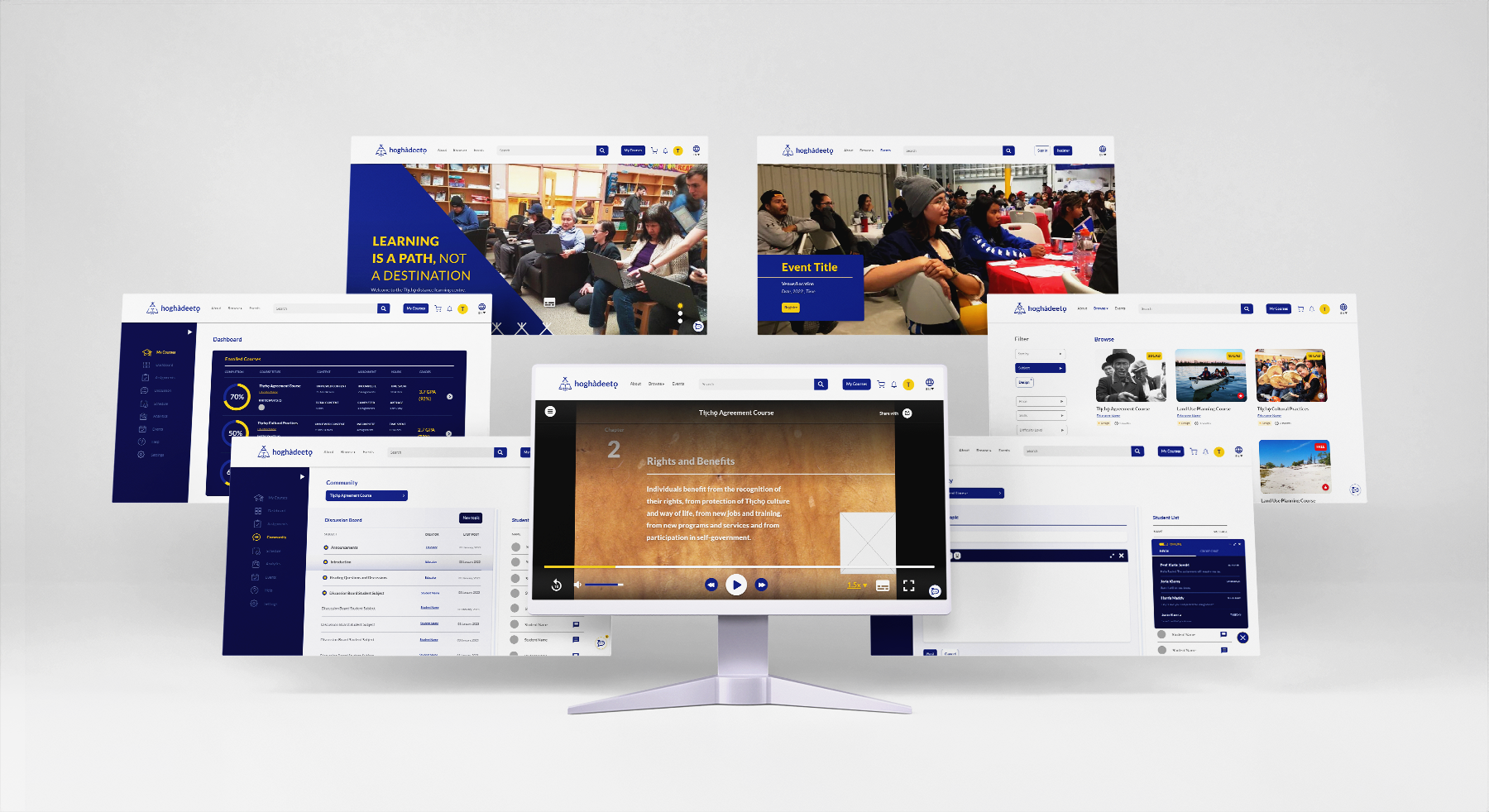
Hoghadeeto is a distance learning platform created for the Tlicho people of the Northwest Territories. The goal of the platform is to provide Tlicho students with access to educators from around the country and a digital space that holds indigenous knowledge for future Tlicho generations. As the principle researcher and designer, my role was to create a culturally appropriate distance learning platform that considers the needs and concerns of the Tlicho people.
The geographic isolation of remote indigenous communities limits education opportunities for their students. This study and project intended to create a culturally appropriate distance learning platform that considers their needs and concerns and can provide those students with new possibilities for education. Throughout the entire process, I was aware of the hesitancy and stress that comes with studying online for people who are not comfortable working in a digital environment. Using appropriate and relatable visuals and symbols within the platform can create a sense of comfort and familiarity for Tlicho students. Designing services for people from a different culture or context requires establishing empathy. Listening and observing what stories or narratives connect with people is essential. People often over emphasize making designs efficient and functional while ignoring the value of storytelling that speaks to your audience.
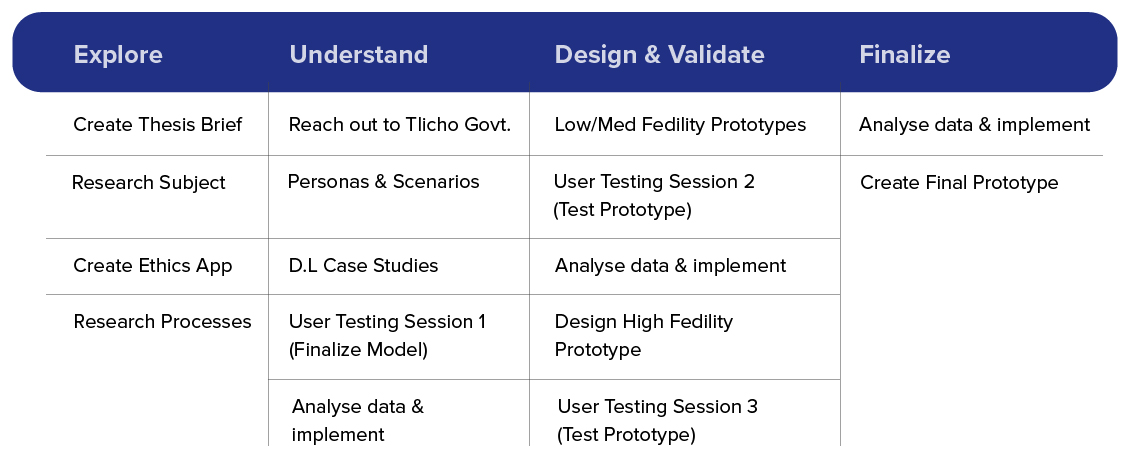
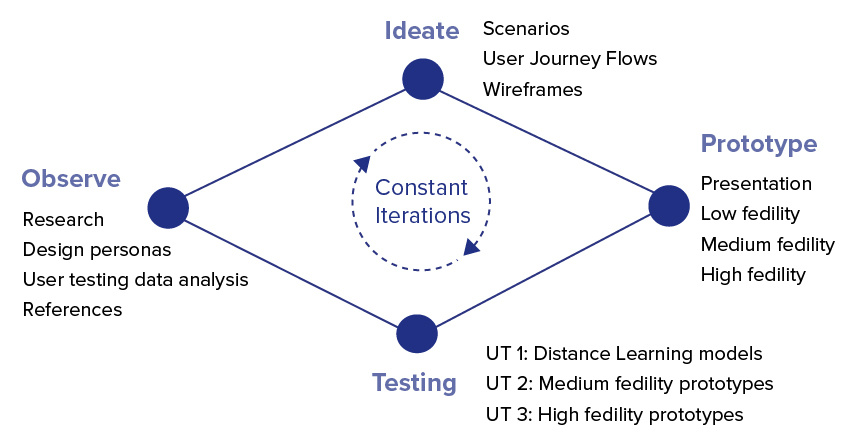
Existing remote distance learning services were studied and analysed for their effectiveness through a series of case studies, secondary research was conducted on appropriate indigenous research practices, and adaptable design processes. The research findings helped highlight the pain points stated above, along with the effectiveness of a Human-Centered Design (HCD) approach in addressing those issues. It was clear that we had to modify existing research practices to work with the indigenous people in an environment that would empower them. Unfortunately we weren't able to meet in person due to the pandemic, hence we created a combination of a focus group and a usability testing. We avoided the issue regarding a lack of a clear problem by providing the participants with various distance learning models, while allowing them to talk with one another and narrow the scope of the designs. We employed a HCD approach by creating personas, generating ideas through scenario development, prototyping possible solutions, and engaging community representatives in iterative testing cycles. This process prioritizes human needs, capabilities, and behavior, allowing for continuous refinement.
To ensure ongoing feedback, three modified user testing sessions were conducted with Tlicho Government representatives. This approach facilitated consistent input and eliminated the need for a predetermined design problem. By involving the Tlicho community, their knowledge of their people's needs guided the creation of a solution aligned with their preferences.
1. Tlicho perspective: Understanding the difficulties Tlicho people face and what they want in a distance learning platform was crucial to offer an appropriate design solution.
2. Research Method: Conducting research in a remote setting while adhering to indigenous research practices presented challenges.
3. User interface design approach: Identifying the best visual approach that authentically represents the Tlicho people and provides a clear user experience was necessary.


During Design Phase 1, five fictional user personas were created to represent different target audiences within the Tlicho region, and scenarios for their various needs were identified along with an appropriate distance model. Four basic distance learning models were designed and presented to the participants during the User testing session. Initially, the assumption was that the Tlicho would prefer a Synchronous approach due to their preference for an interactive environment based on research conducted. However, after presenting the pros and cons of each approach, the participants preferred Option 2 (Time-restricted Asynchronous Learning) due to its sustainability, affordability, and evaluable capabilities, allowing for the possibility of credential courses which is required for career growth.
In Design Phase 2, all data gathered from the previous testing was analyzed and compiled. The process of building the website started by making sketches for the various screens required, functionality that needs to be included, and structuring where different information should be placed. Low fidelity digital mockups were created, which were developed into more comprehensive medium fidelity prototypes. These prototypes were tested with the participants who provided valuable feedback. Participants suggested that the website should be more flexible, allowing users to access different functions of the platform through numerous ways, which would make it easier to access functions. They also wanted a space to join in-person educational events within the community and locate events. Lastly, participants suggested the title "Hoghadeeto," which means "learn" in Dogrib, as a suitable title for the platform, as it encourages users to learn a Tlicho word instantly.
.png)
.png)
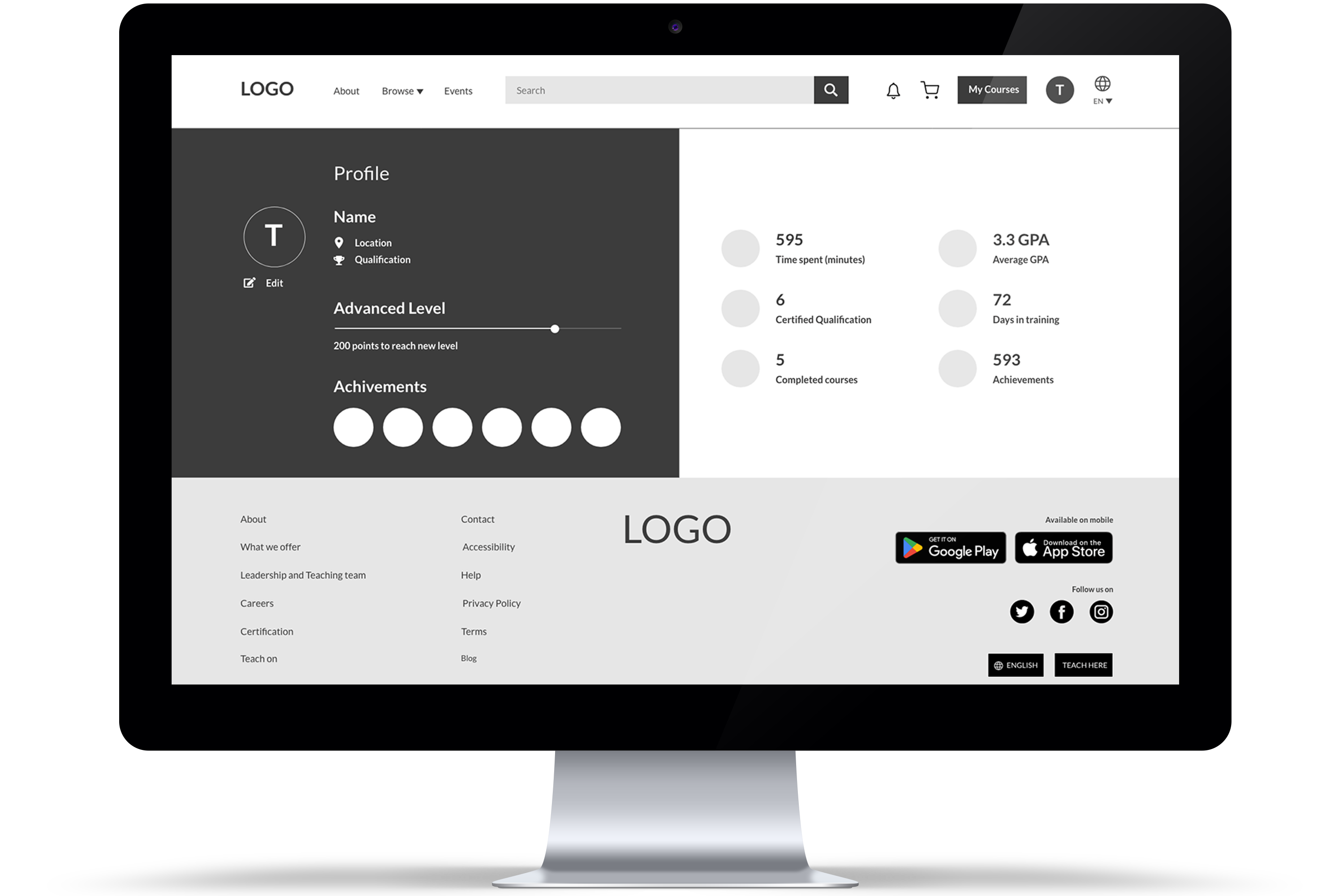
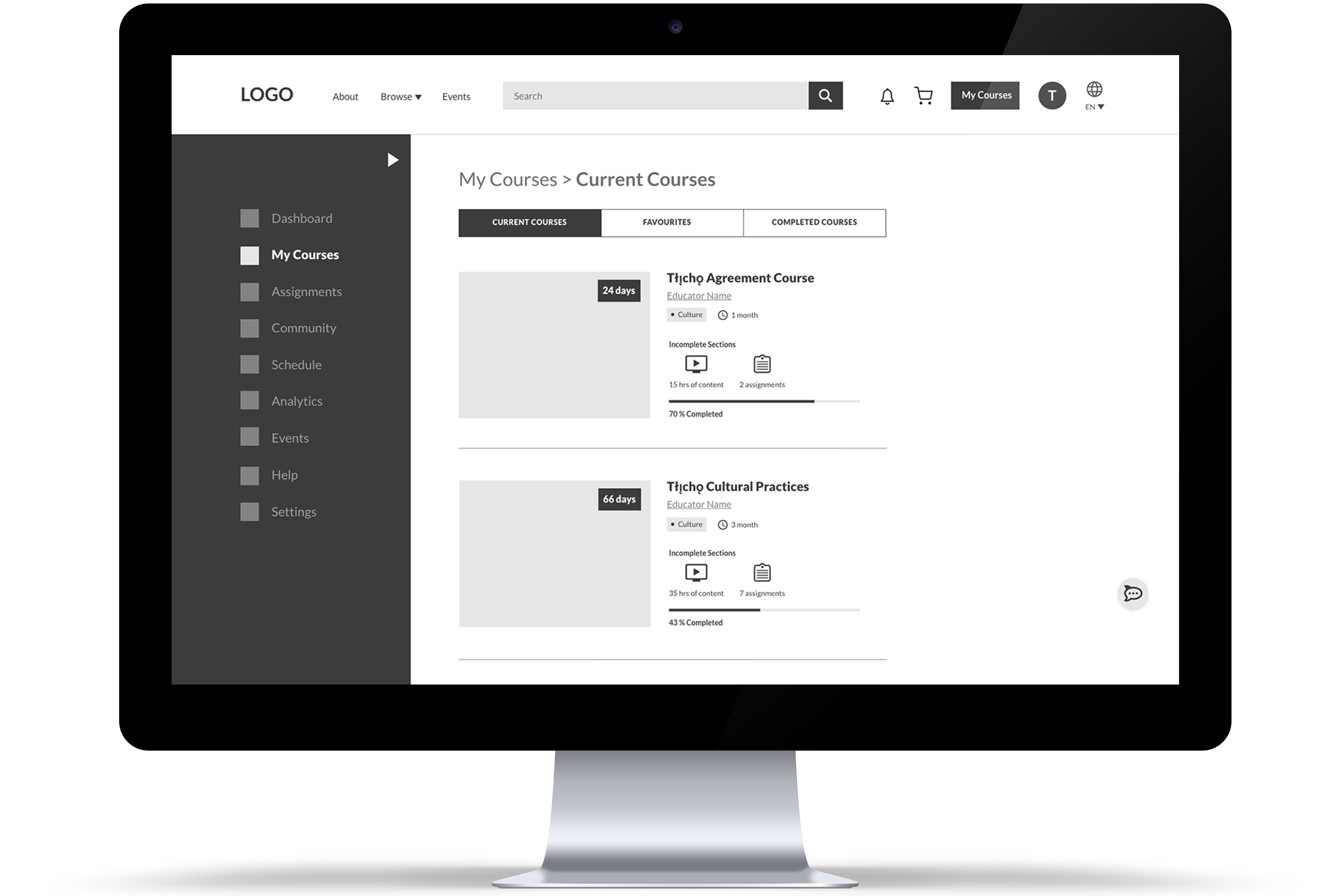
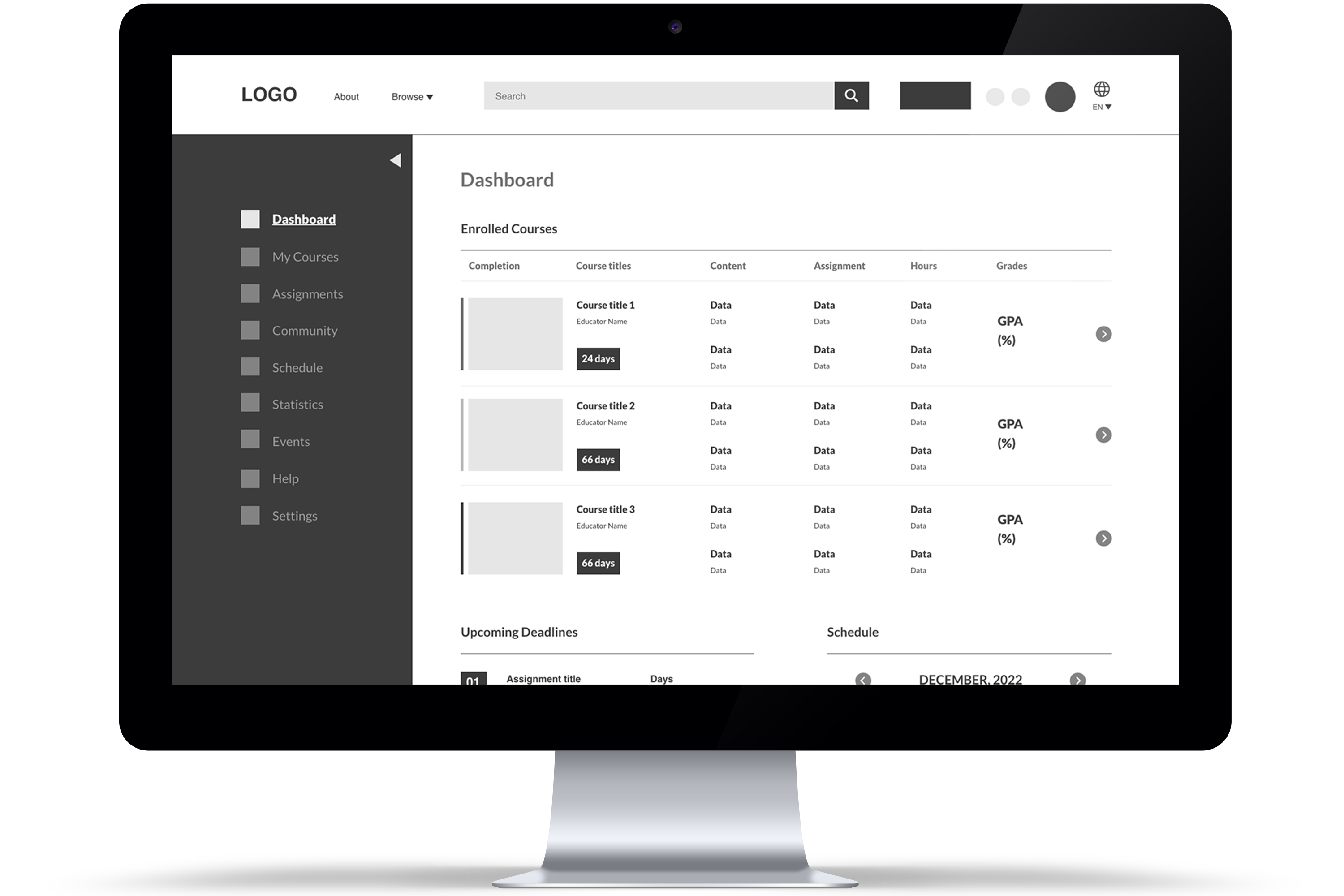
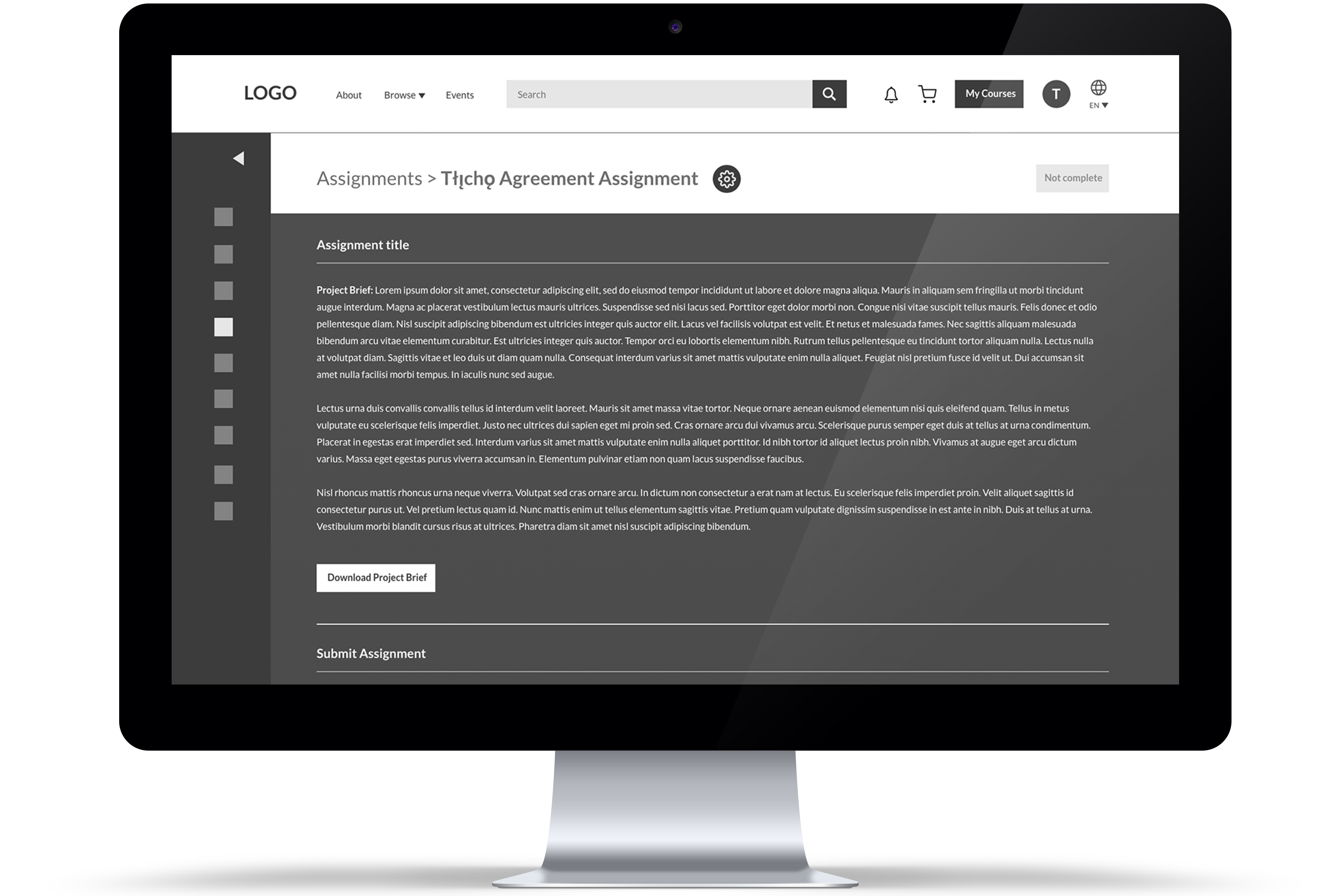
Design Phase 3 (User Testing Session: Usability Testing) focuses on developing the visual user experience of the platform. I started by creating five rough high fidelity mockups of the home screen along with numerous identity systems (logos) for Hoghadeeto. The identity system and initial high fidelity prototype were tested with the Tlicho Government Designer to find the colours, design style, typography, symbolism and identity systems that would resonate with the Tlicho people.
Different options were showcased and the designer offered valuable insights on the style and vision that would work best in keeping things visually aligned with their existing platforms along with visual cues and symbolism that resonate with the Tlicho people. She suggested that we use the navy blue and yellow from the Tlicho flag as the primary colours along with beaded patterns which is famous within the Tlicho. Using these colours, symbols and images help in creating a platform that connects with the people and makes students feel more comfortable.
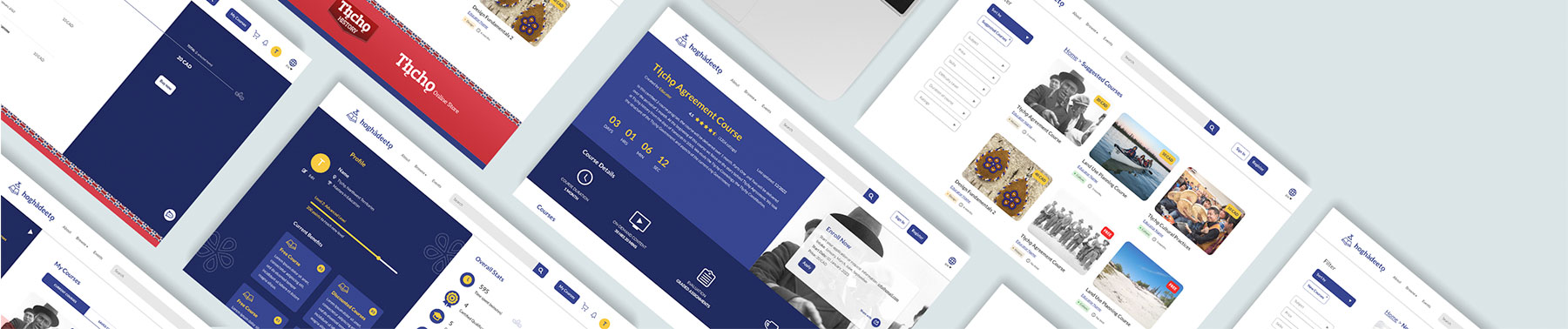
From the start of this project, it was important that we create a platform that connects with their people. Insights gathered from the meeting with the designer were collected and implemented along with the adjustments from the previous testing with the participants. Colours, typography, symbolism and images were added to the platform along with appropriate adjustments within the layout along with the addition of secondary colours to assist in creating better contrast of colours essential for accessibility. I created additional navigations flows for different functions, changed the favourite symbol to a star from the Tlicho flag and created a more comprehensive profile system which would offer students rewards for completing courses through discounts adding gamification elements to motivate student progress. Lastly, the Learning Management section was further developed by building more interfaces and integrating different functions with one another.
Overall, this iterative and collaborative design process, driven by the principles of Human-Centered Design, enabled the development of a distance learning
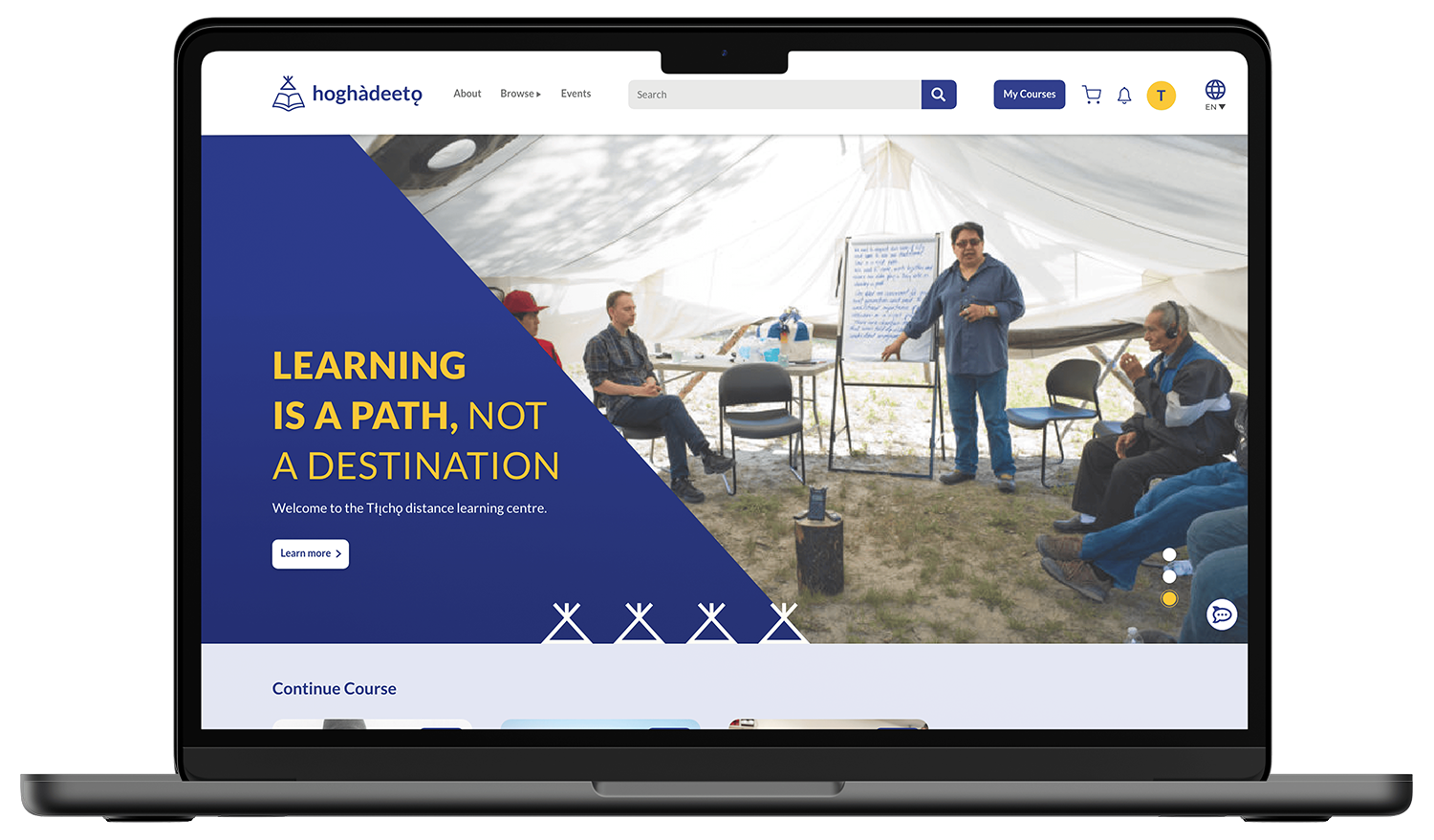
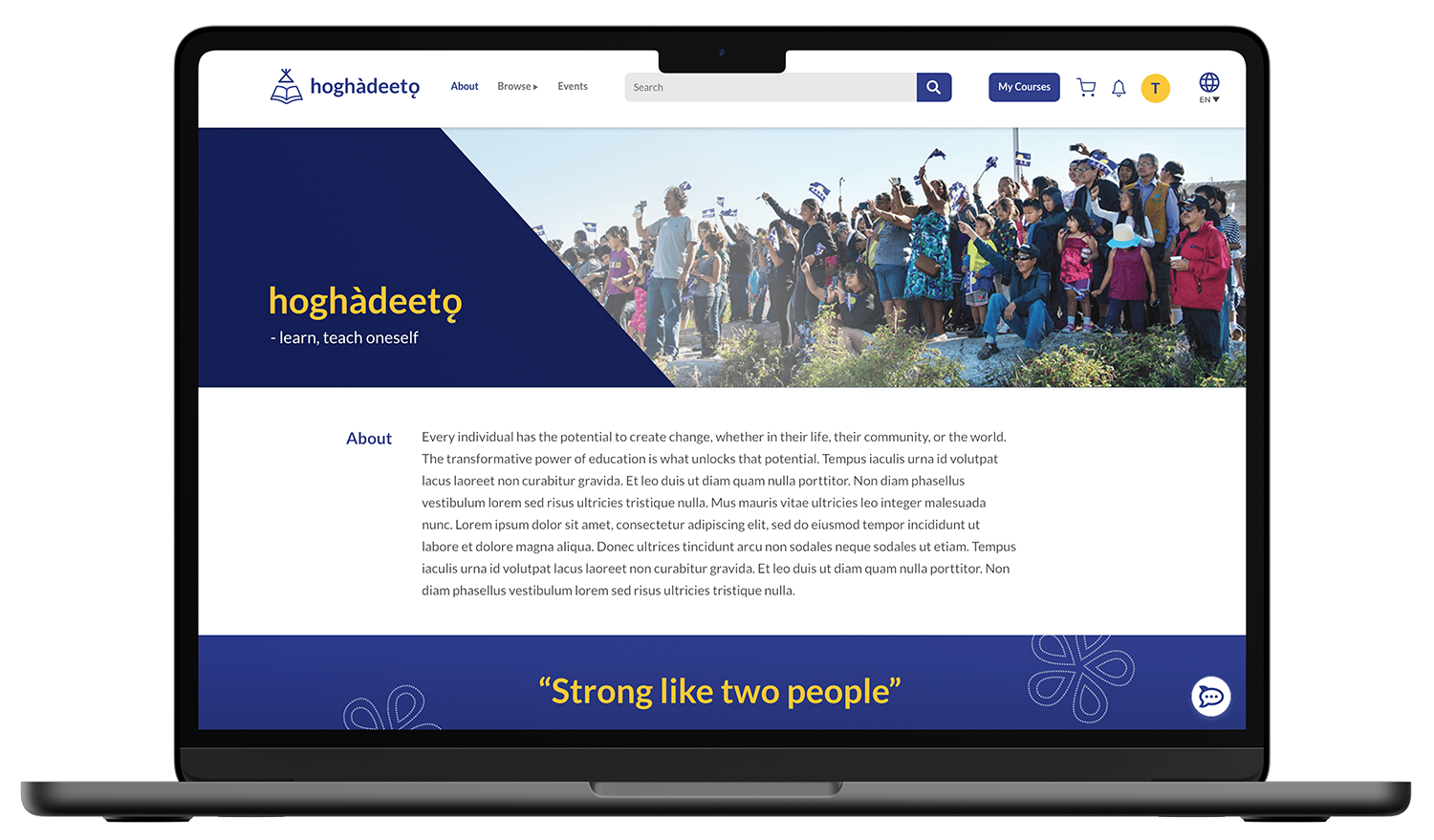
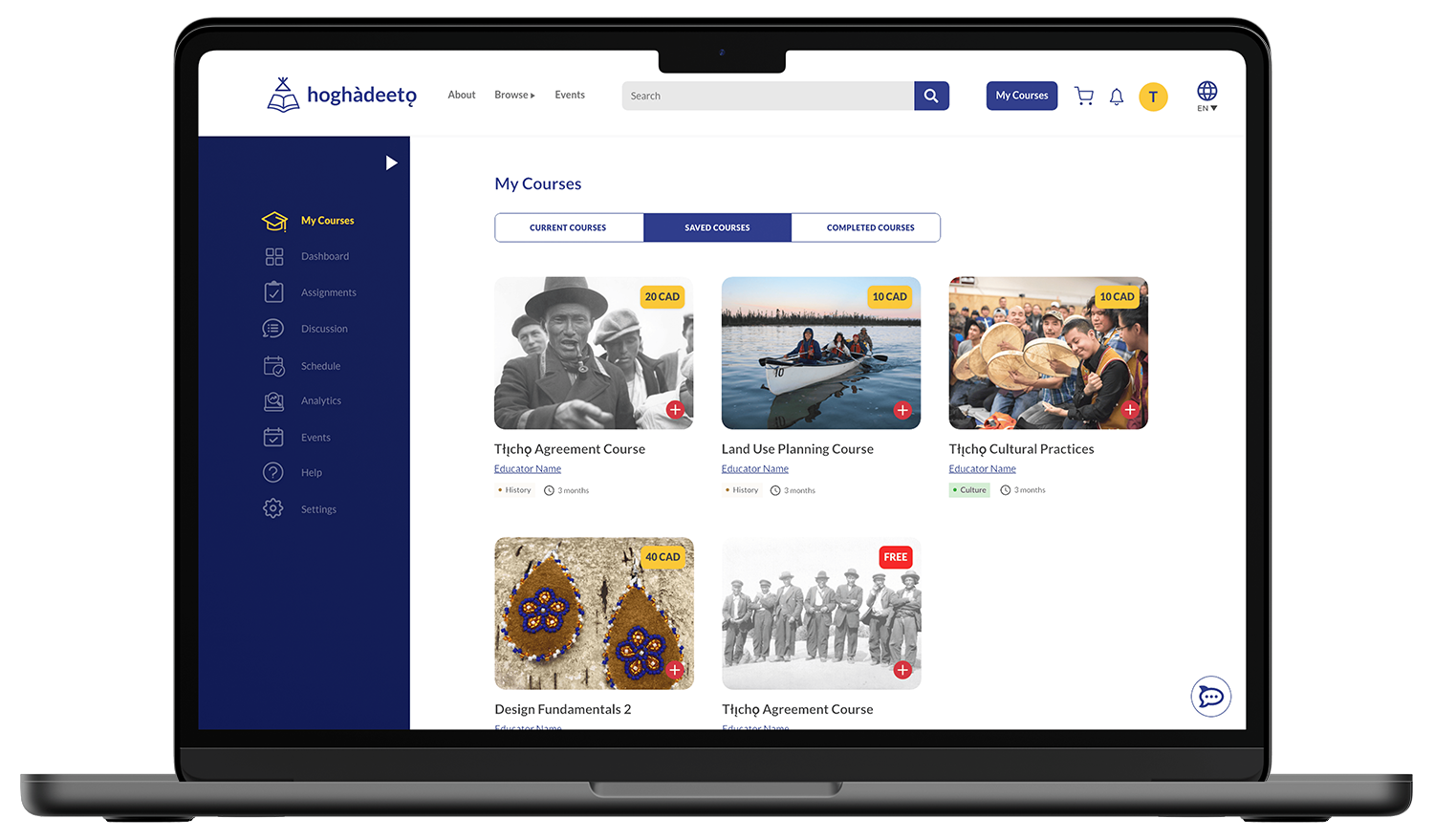
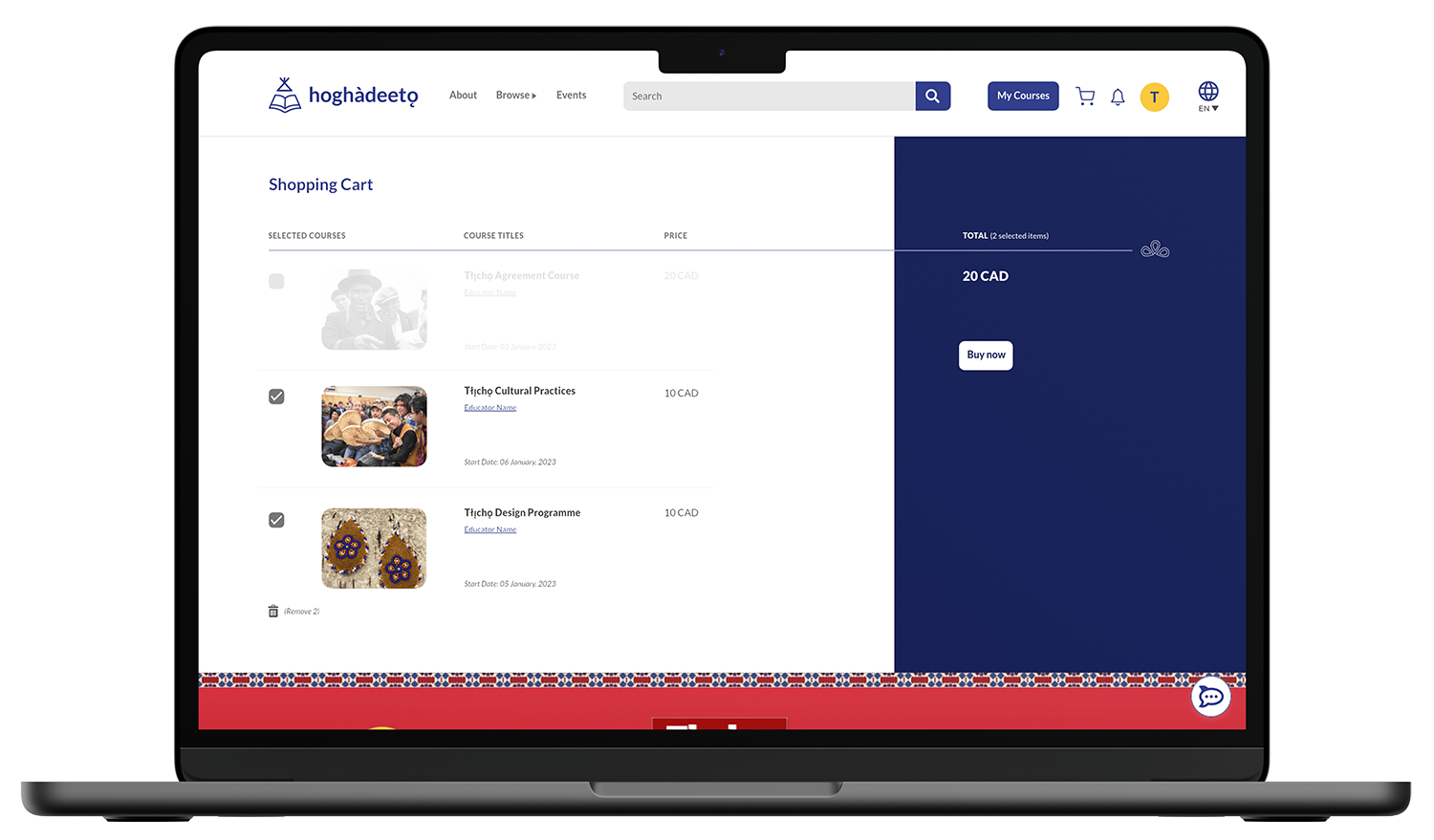
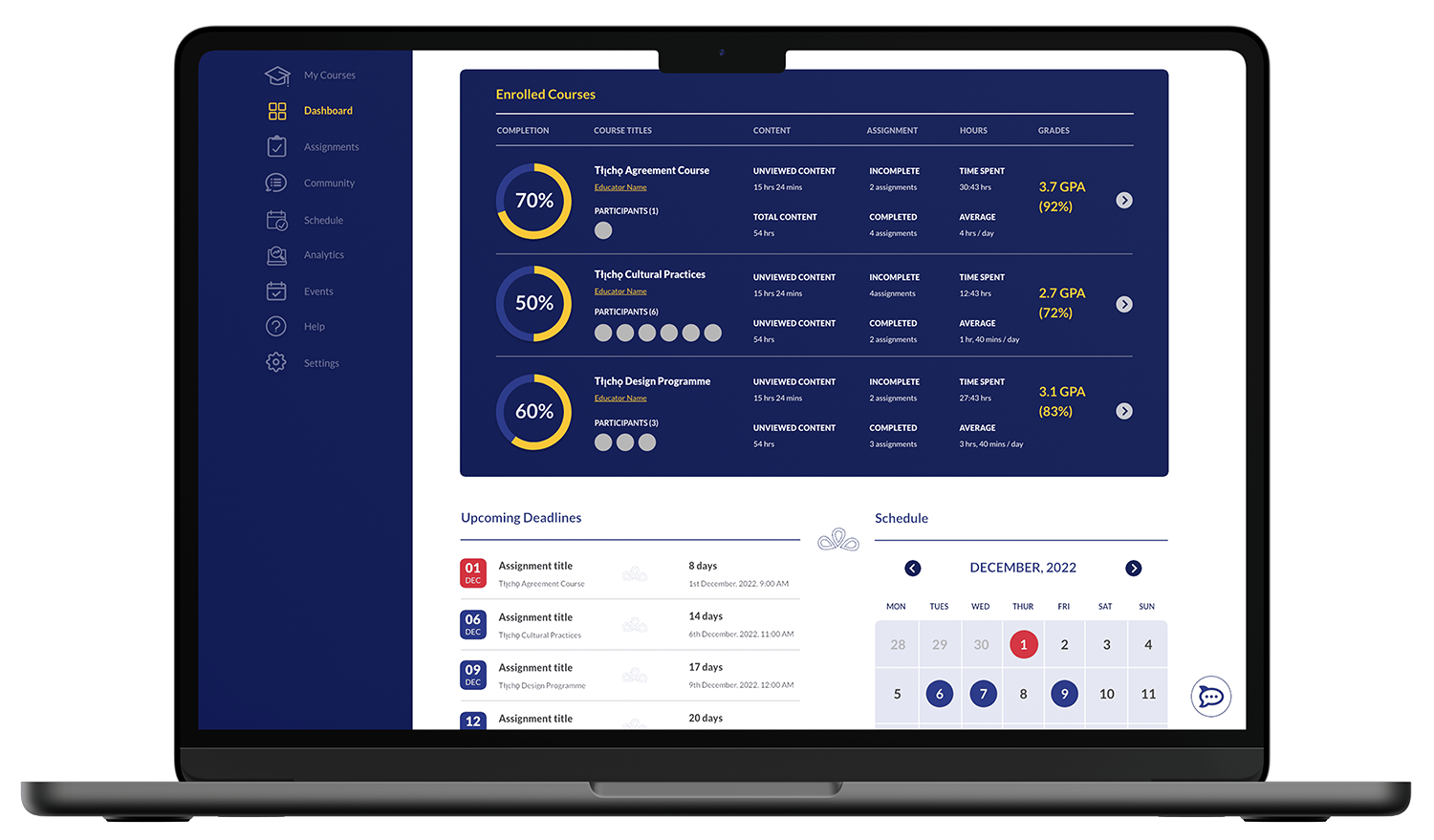
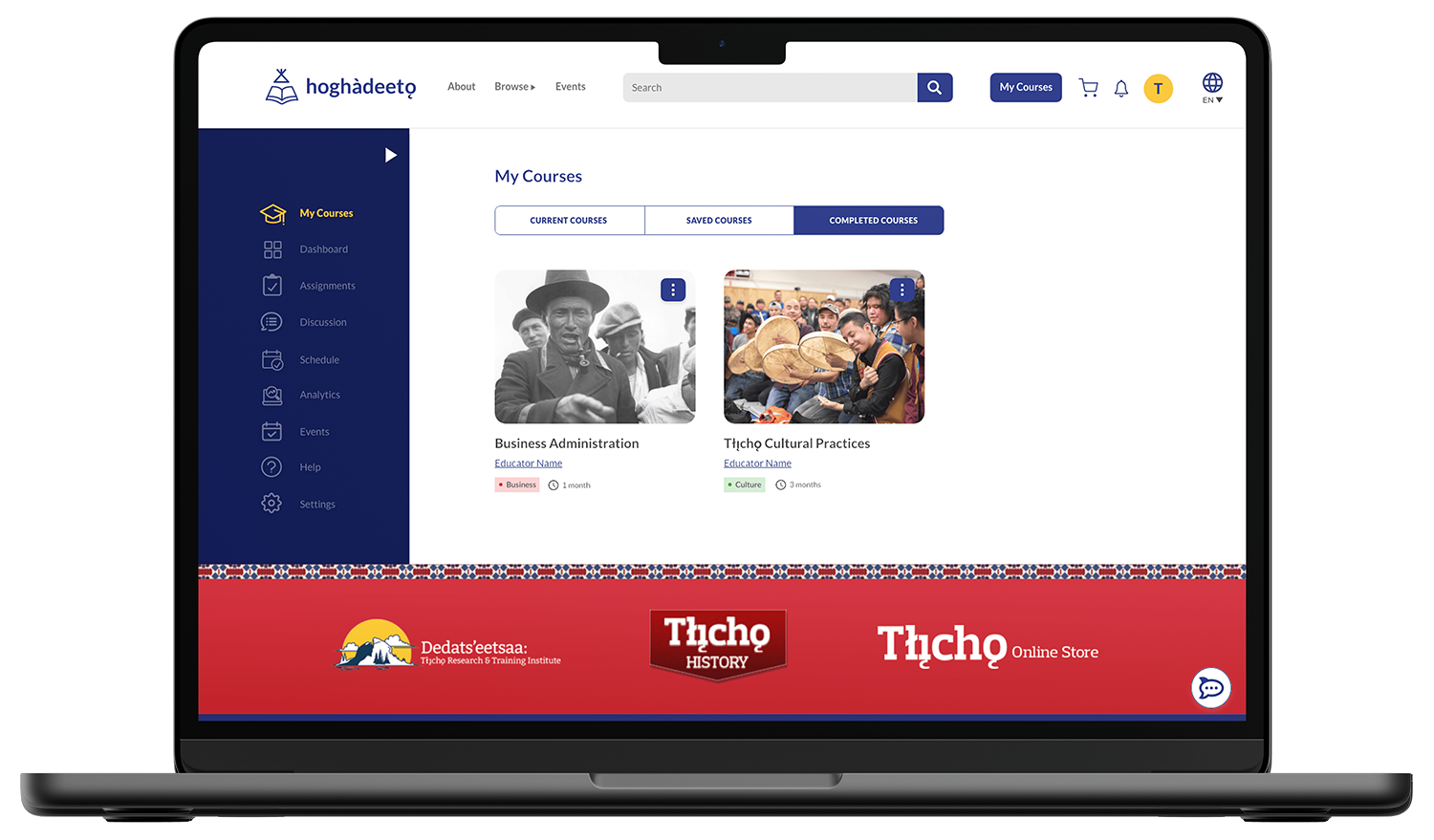
The Hoghadeeto platform is an effective asynchronous distance learning tool designed to address the unique needs of the Tlicho people. The platform features over 50 user interfaces showcasing e-commerce, learning management systems, gamification, search capabilities, and user registration. The platform offers Tlicho students access to a broad network of educators while creating a digital space to store and share indigenous knowledge. The platform is visually engaging, using color schemes, visual symbolism, content, functionality, and typography that are true to the Tlicho culture.
The Hoghadeeto platform provides Tlicho students with educational opportunities and flexibility to enhance their skills and pursue career growth. The Tlicho Government has expressed interest in developing this prototype into a product, which will involve further alterations through a series of broken-down phases. The project is well documented, including comprehensive personas, scenarios, task flows, and design development in the thesis. The final product has proven to be engaging, functional, and effective, and its future looks exciting as it continues to provide more value to the Tlicho people.