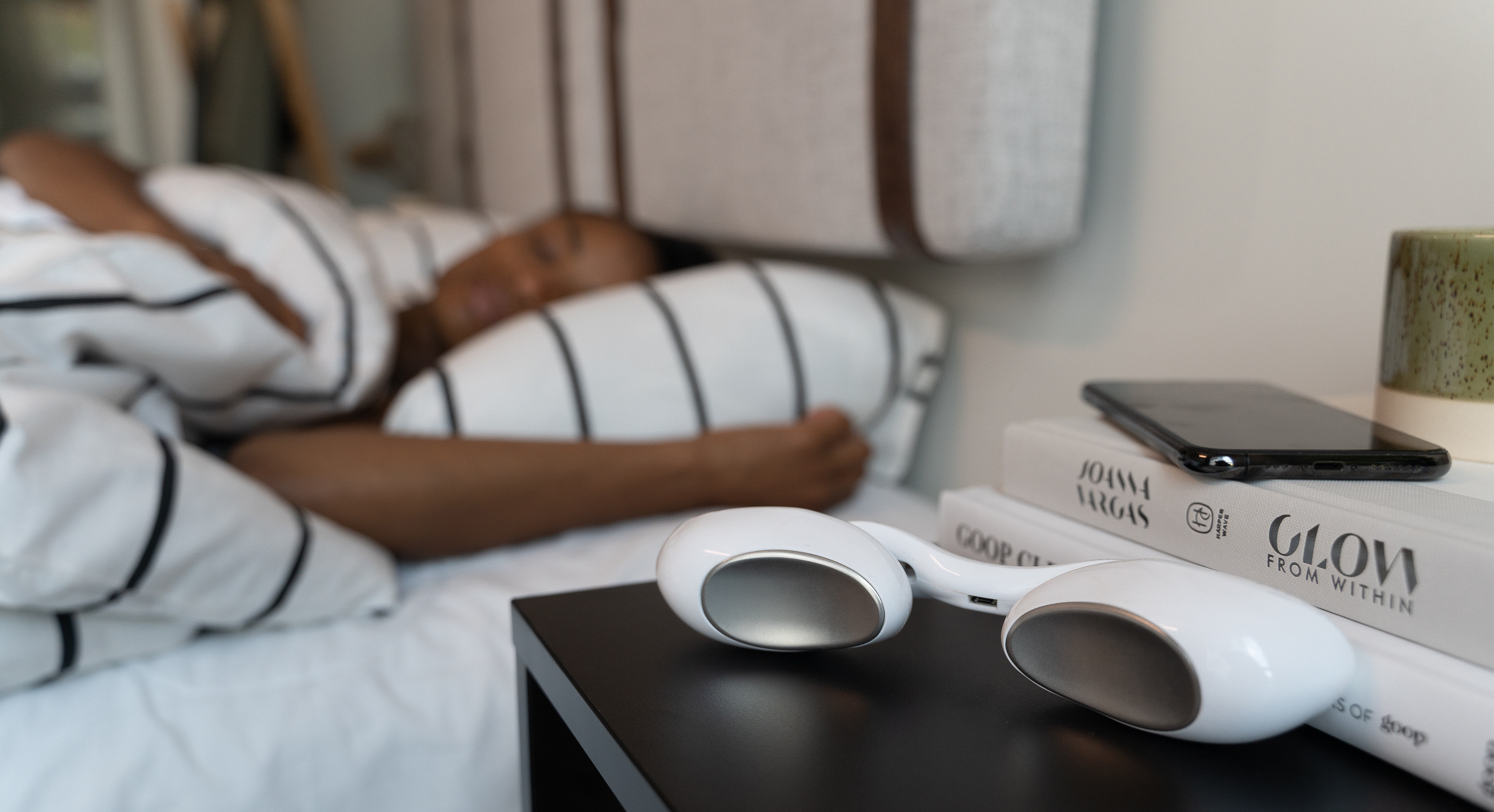
Umay is a health and wellness company based in Edmonton that offers a distinctive product designed to alleviate dry eyes and improve sleep. Their product, called REST, utilizes warming and cooling therapies in combination with mindful breathing exercises to enhance users' mental wellbeing and overall quality of sleep. As the primary User Experience designer, my responsibility was to redesign Umay's website to effectively communicate their brand story, highlight the scientific data supporting their product, and showcase and sell their innovative product. Throughout the project, I collaborated with the Umay team who conducted multiple user tests and analyses to ensure the website met the needs and preferences of their target audience.

Umay faced several pain points with their previous website, as it failed to deliver the necessary information that potential users needed to know about their unique product. The lack of details about the product's functions and benefits made it challenging to educate and convince users to purchase it. Thus, Umay required a digital space that could share their story and highlight the product's unique features with visually appealing content. Additionally, the website needed to provide scientific evidence of the product's benefits and demonstrate how it could improve daily life. Furthermore, it was crucial to align the website's design with Umay's packaging and application to enhance brand recognition and consistency. To address these challenges, the Umay team and I focused on creating a website that delivered on these requirements and met the needs of Umay and its users.
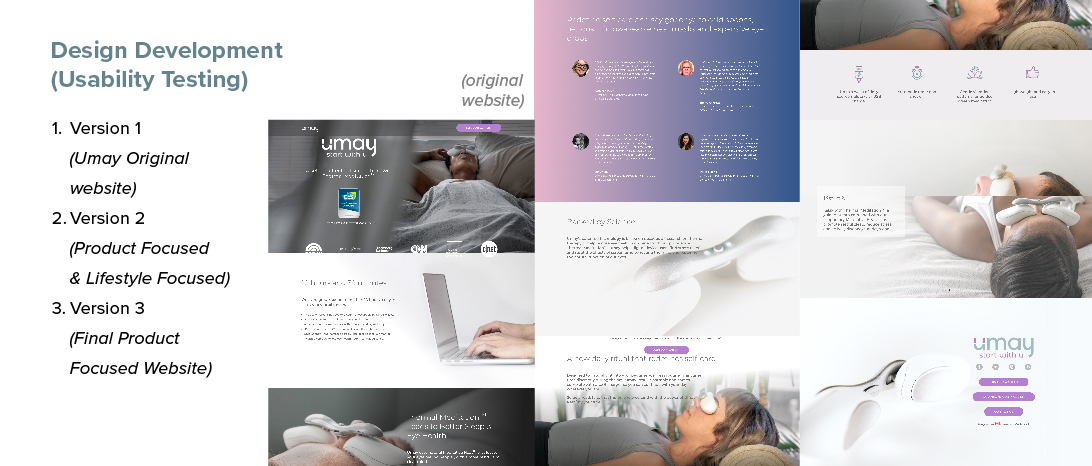
The research methodology behind designing the Umay website involved a series of user testing to evaluate numerous design options. We began by conducting a thorough analysis of the market to understand the target audience and their needs. Then, we designed wireframes and prototypes based on our findings and presented them to the Umay team for feedback.
After incorporating their feedback, we conducted a series of user tests to evaluate the effectiveness of the design. We used a combination of quantitative and qualitative methods to gather data, including surveys, interviews, and analytics. This helped us identify areas that needed improvement and make necessary adjustments.
We repeated this process several times, making changes and conducting new rounds of user testing until we arrived at a design that met both the needs of the users and the goals of the company. Overall, the research methodology was iterative and collaborative, ensuring that the final product was user-centered and effective in achieving the company's objectives.
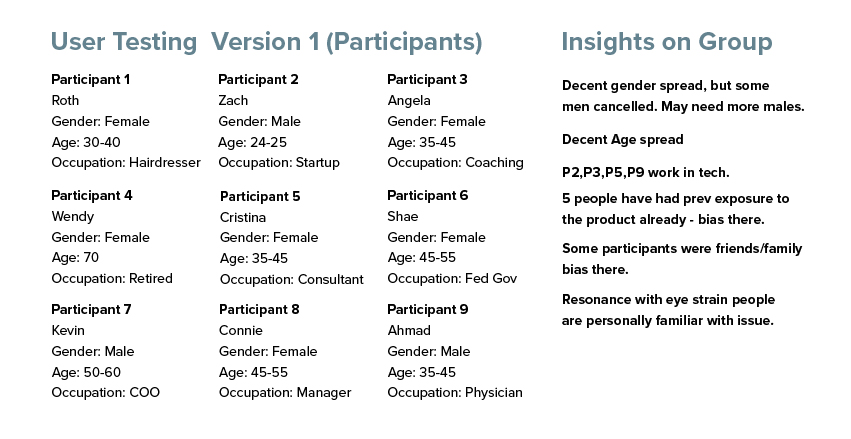
The main difficulty in designing the platform was striking the right balance between a scientific approach, which involves explaining all the technical details of the product, and a lifestyle-focused approach that highlights how to use the product in daily life. Our team had to ensure that the platform offered sufficient information without overwhelming the users. Achieving this balance was challenging. We needed to create a visually engaging experience to capture users' attention while providing valuable information that educates them about the product and encourages them to purchase it. We also identified the following challenges that needed to be improved.
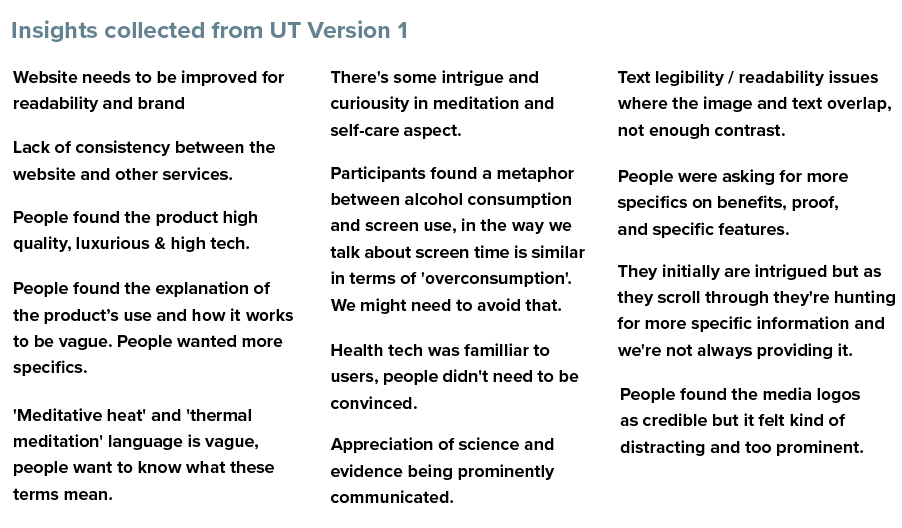
As part of the design process for the Umay website, our team identified a primary challenge faced by users: a lack of prevalent product information. Coupled with users' tendency to avoid reading lengthy texts, this posed a significant hurdle for effective communication of the product's features and benefits. To overcome this challenge, we incorporated visually appealing elements throughout the website, including icons and images, to showcase key features and explain how to use the product. By prioritizing the use of engaging visuals, we aimed to provide users with an immersive and interactive experience that would help them better understand the product's value proposition.
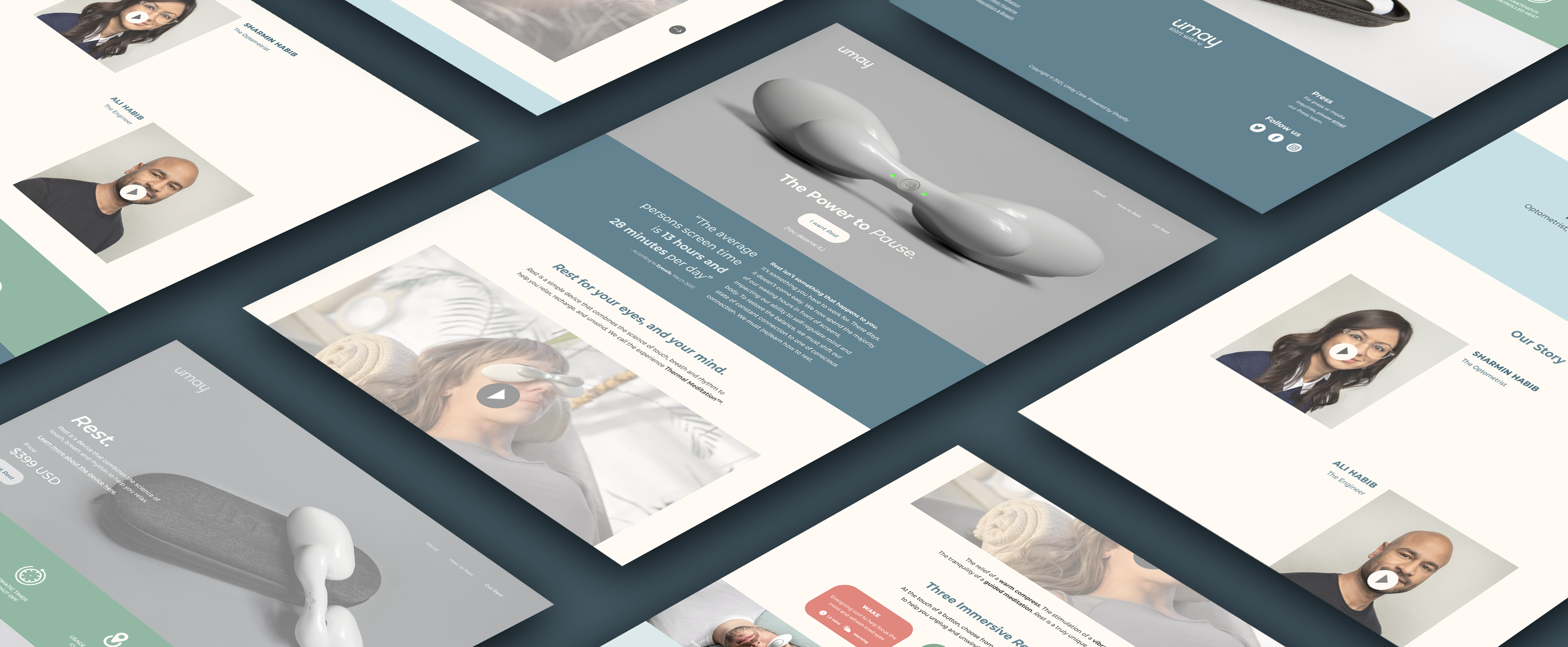
It was also important to ensure that the website stayed consistent with the brand guidelines established in the packaging and application of the Umay product. We carefully curated the color scheme, typography, and overall design language to align with the brand's identity and create a cohesive user experience across all touchpoints.
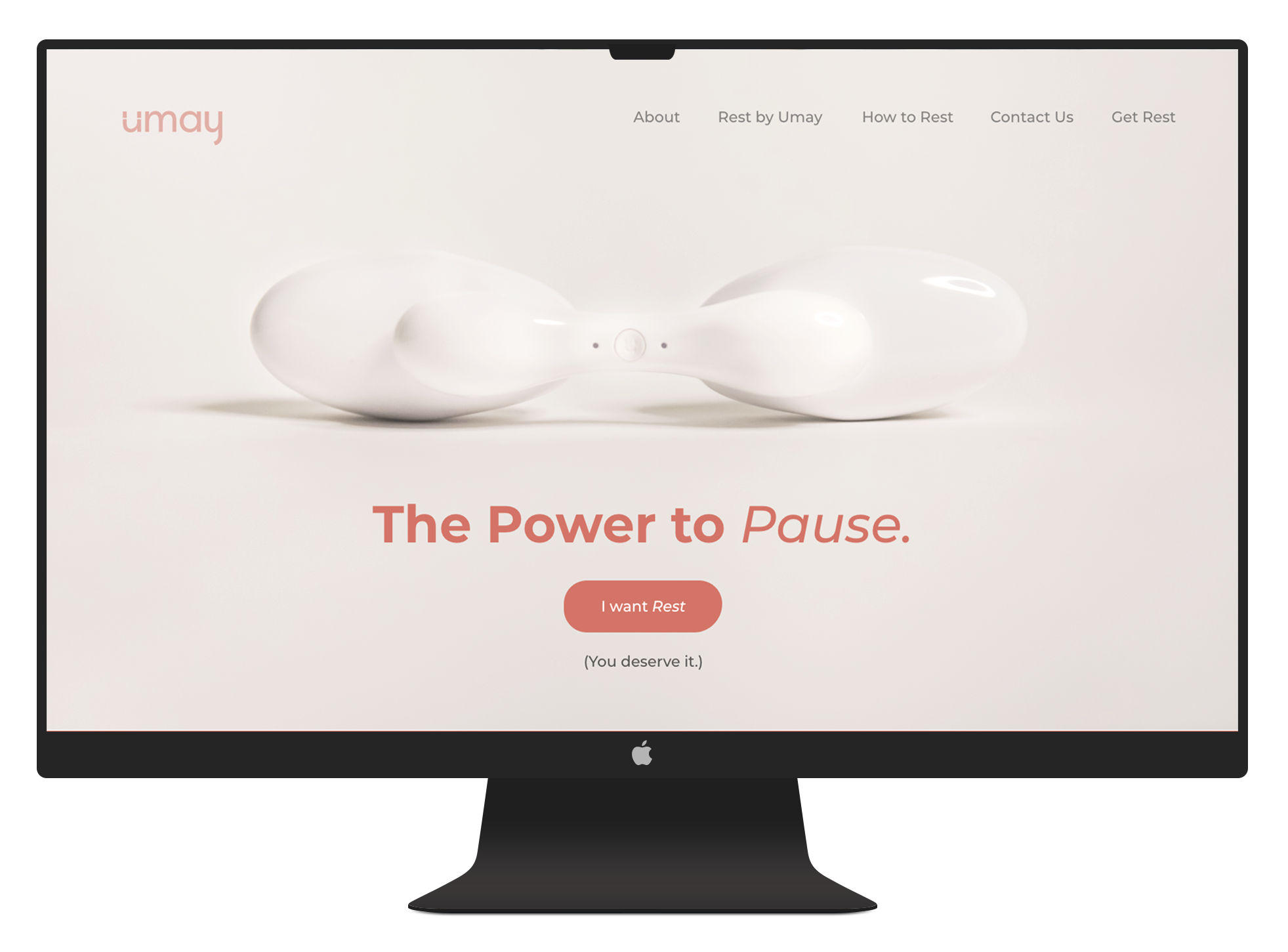
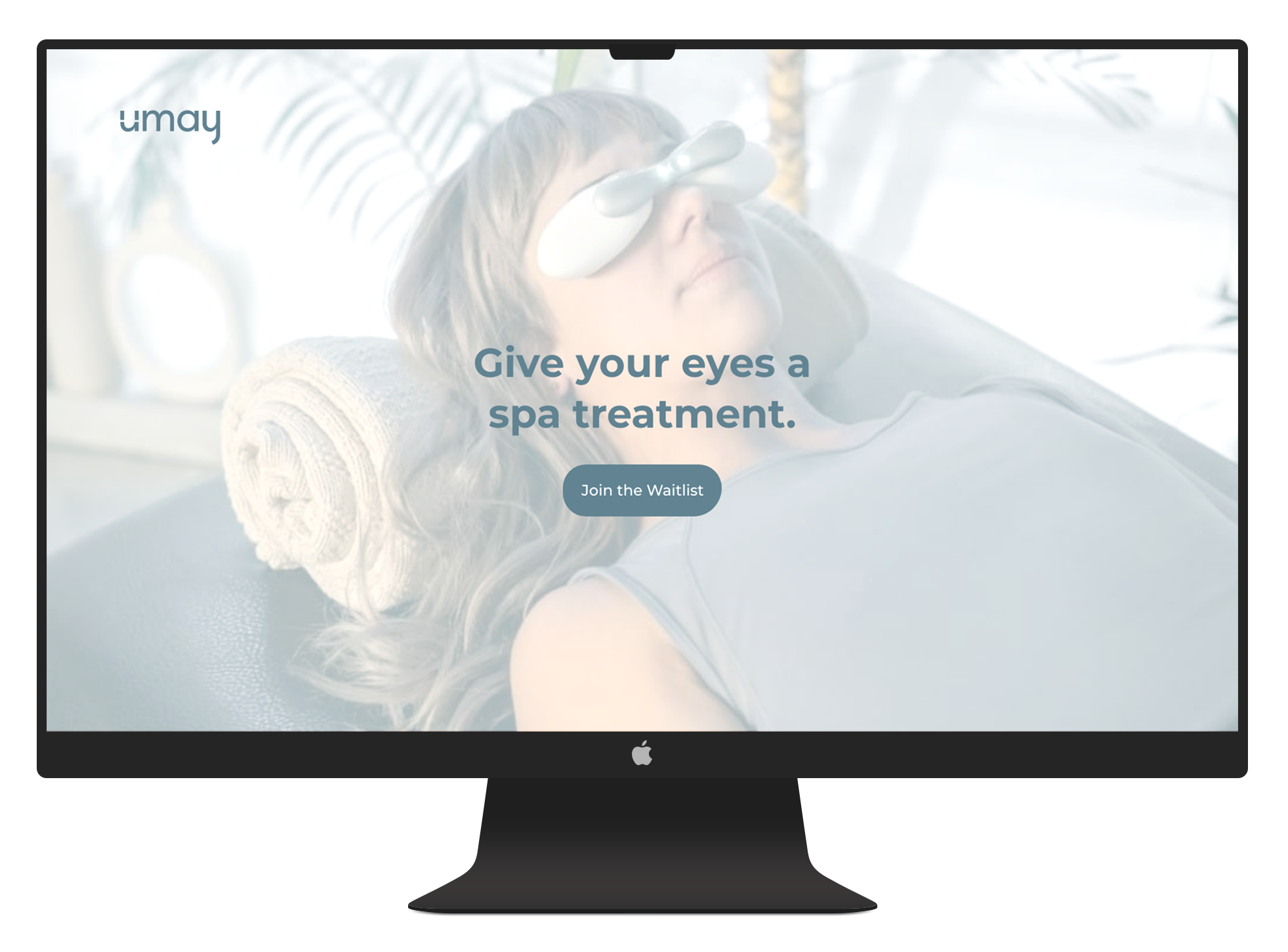
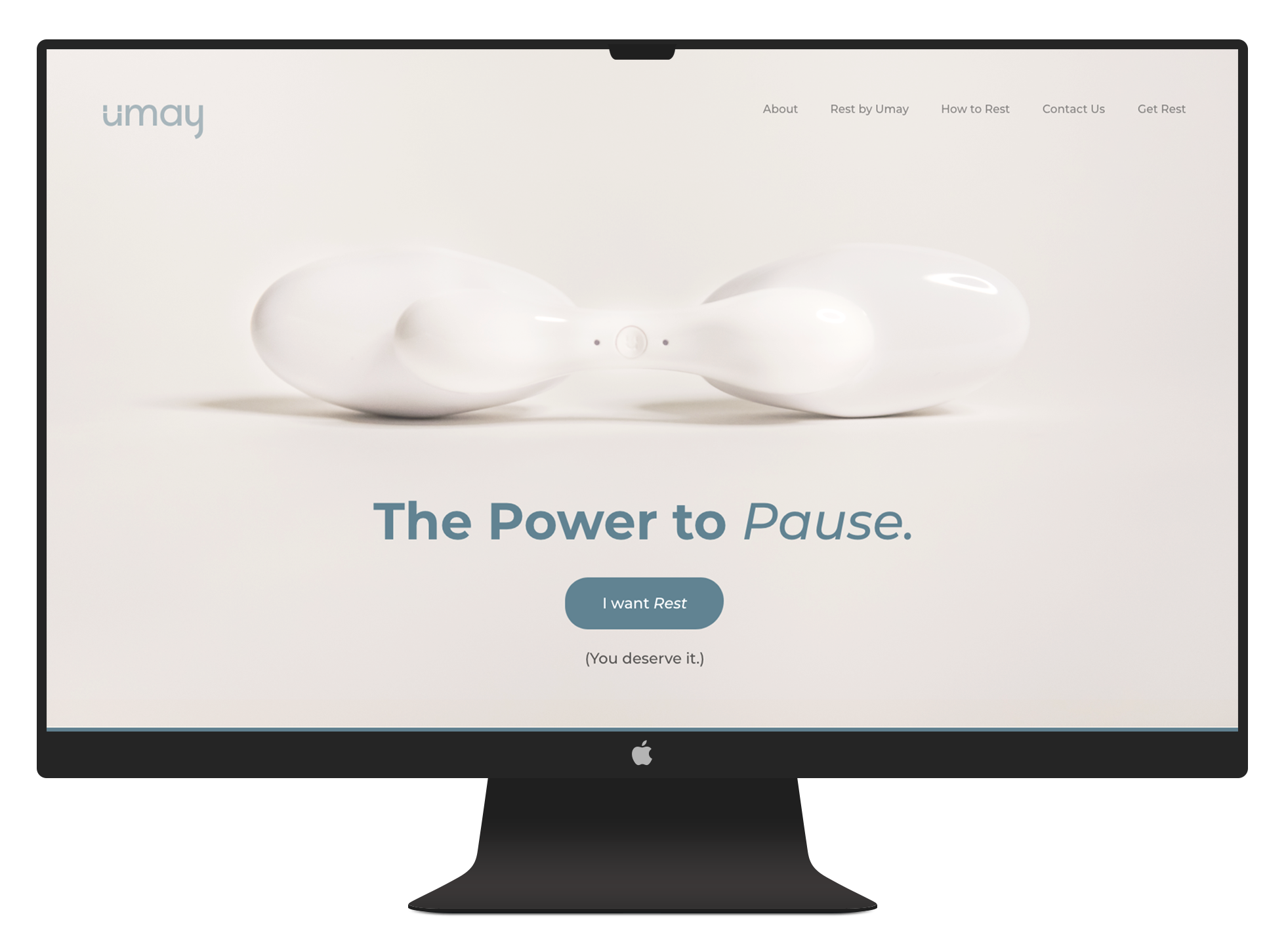
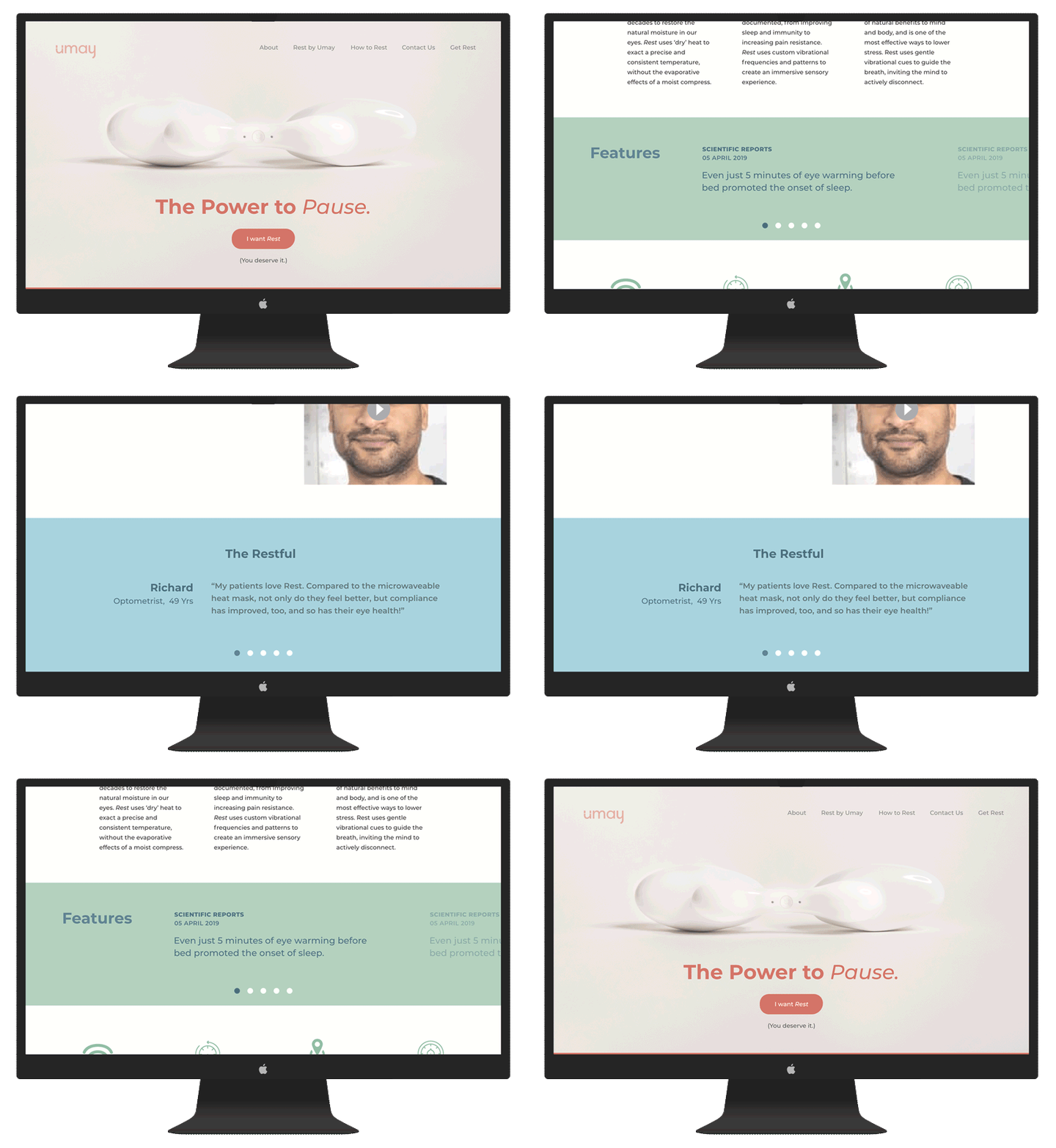
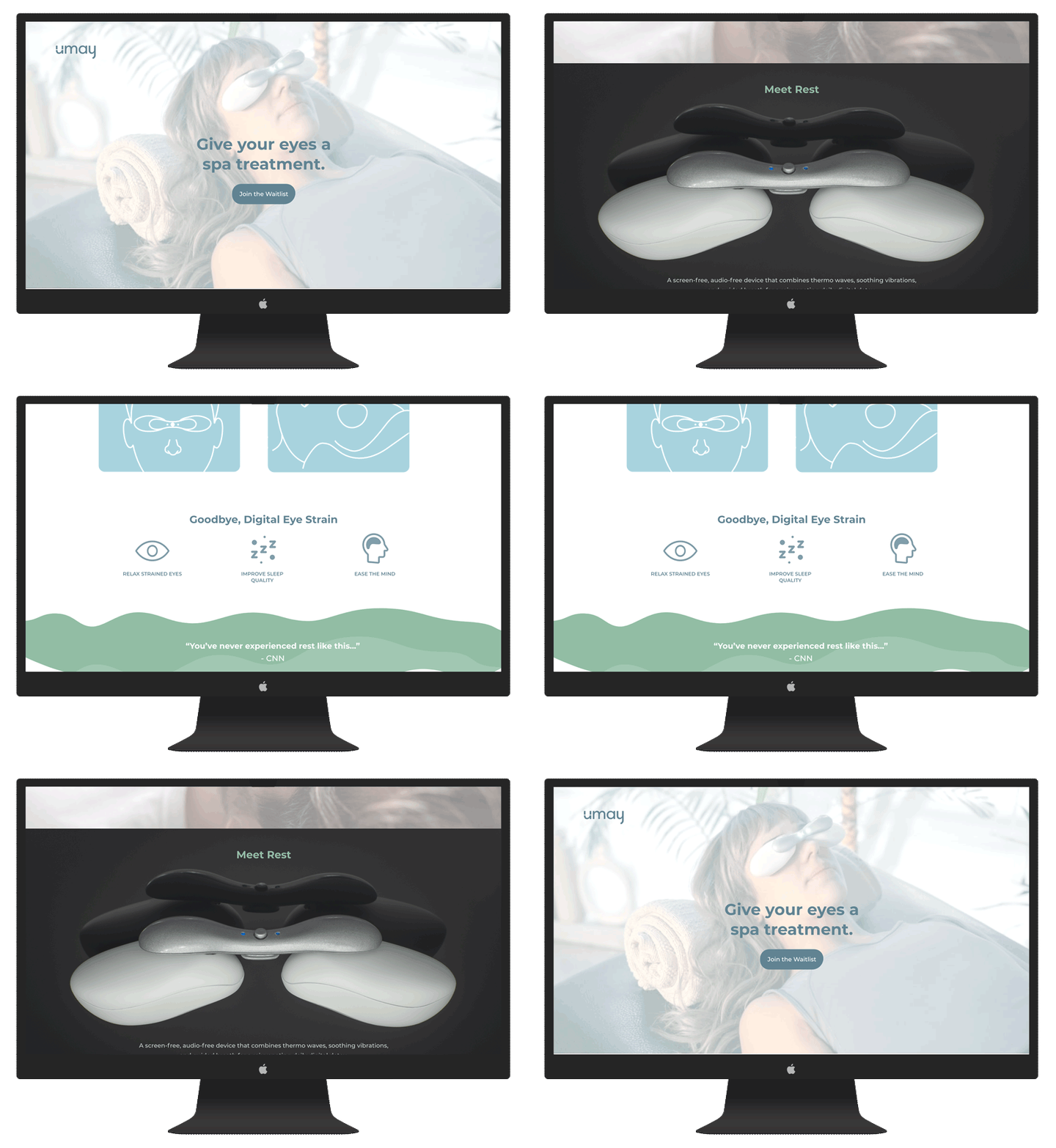
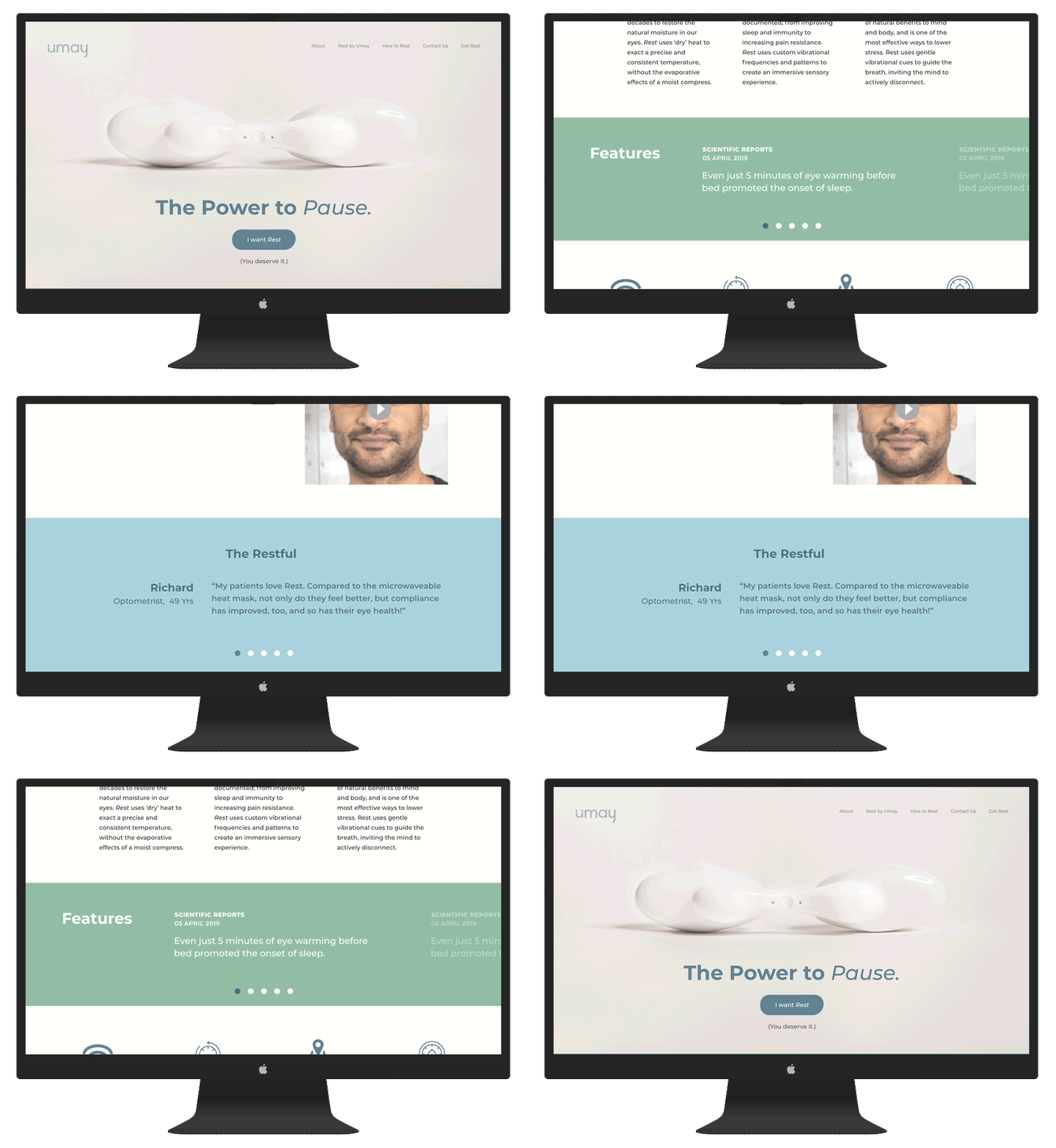
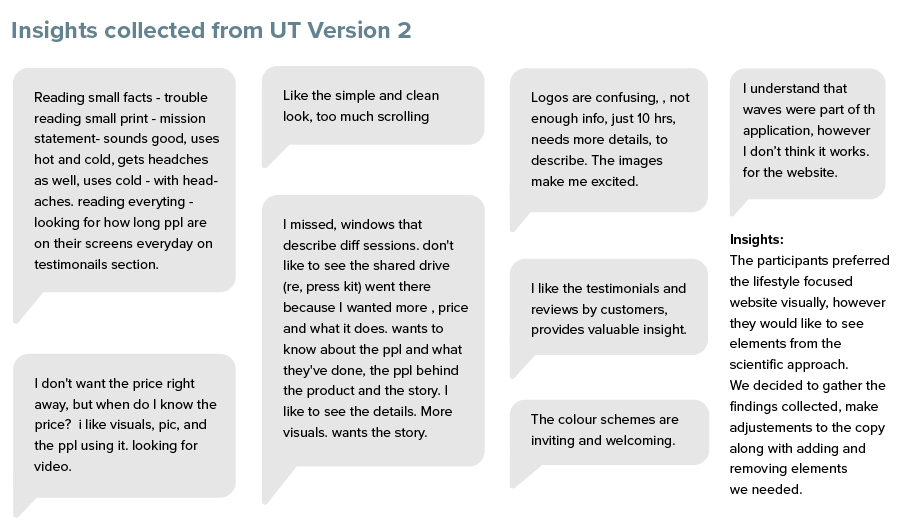
When creating the Umay website, the Version 2 of the website shown below involved building and testing two potential approaches could be taken regarding the website's overall focus. The first approach was a product-focused website that would highlight the science behind the product and its benefits. This approach would cater to users who were primarily interested in the technical aspects of the product and wanted to learn about the science behind it. The product-focused website would emphasize the unique features of the Umay device and how it worked to improve the user's health and wellness.
Alternatively, we also considered a lifestyle-focused website that would showcase how the Umay device fits into the user's daily routine. This approach would be more suitable for users who were interested in the practical applications of the product and how it could benefit their daily lives. The lifestyle-focused website would highlight the convenience of the Umay device, how it could be easily incorporated into a user's daily routine, and how it could help users achieve their wellness goals.
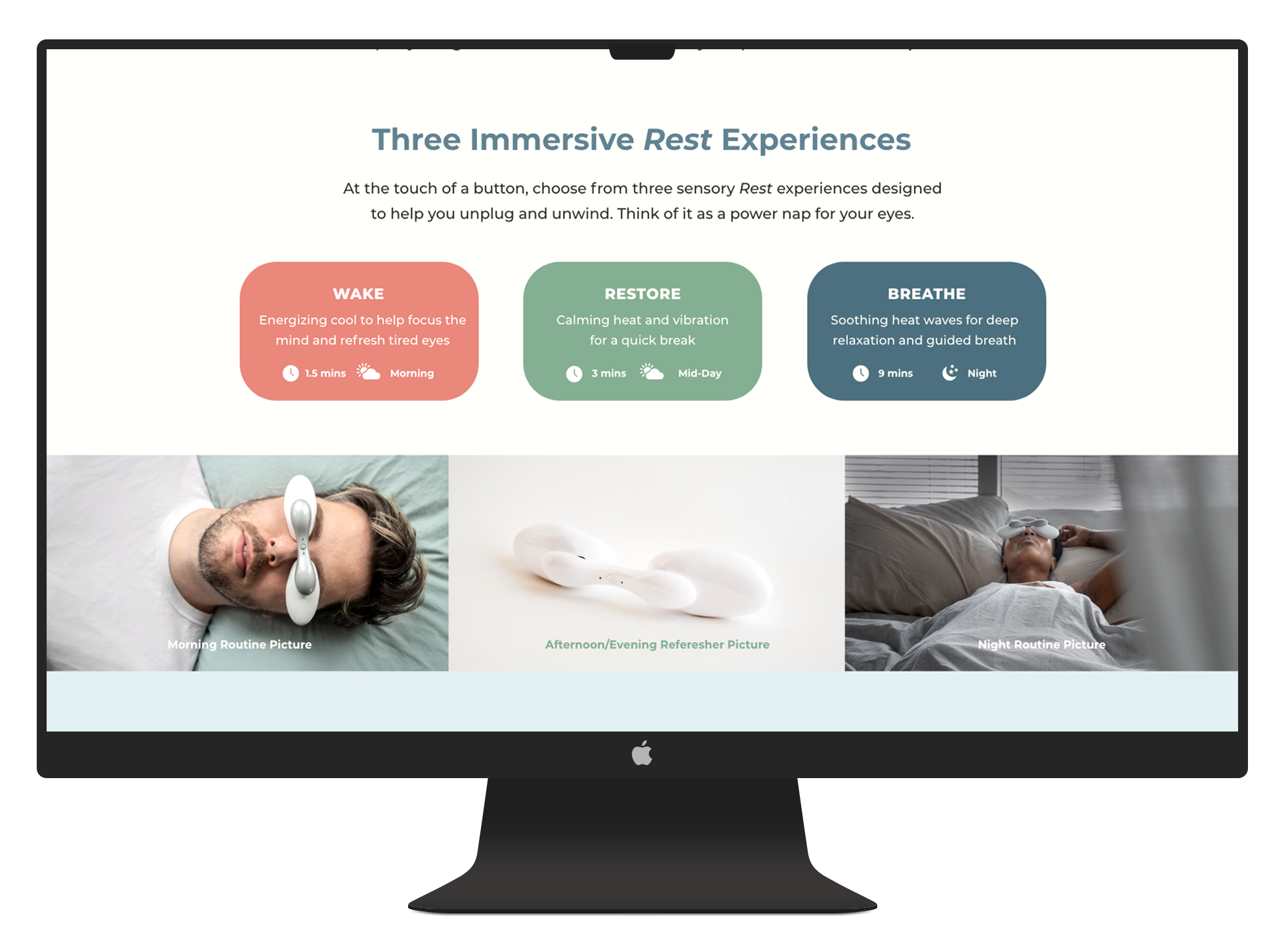
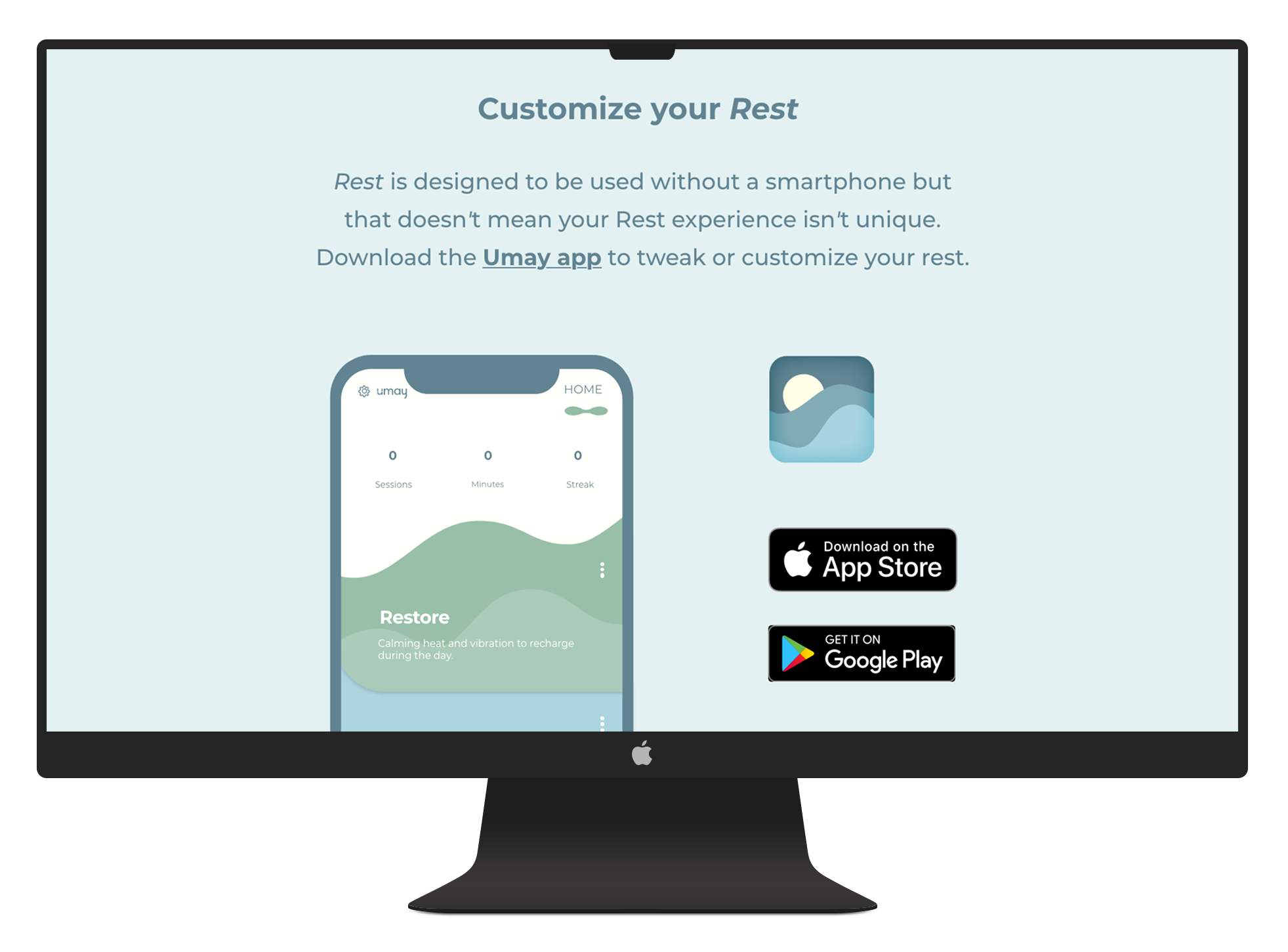
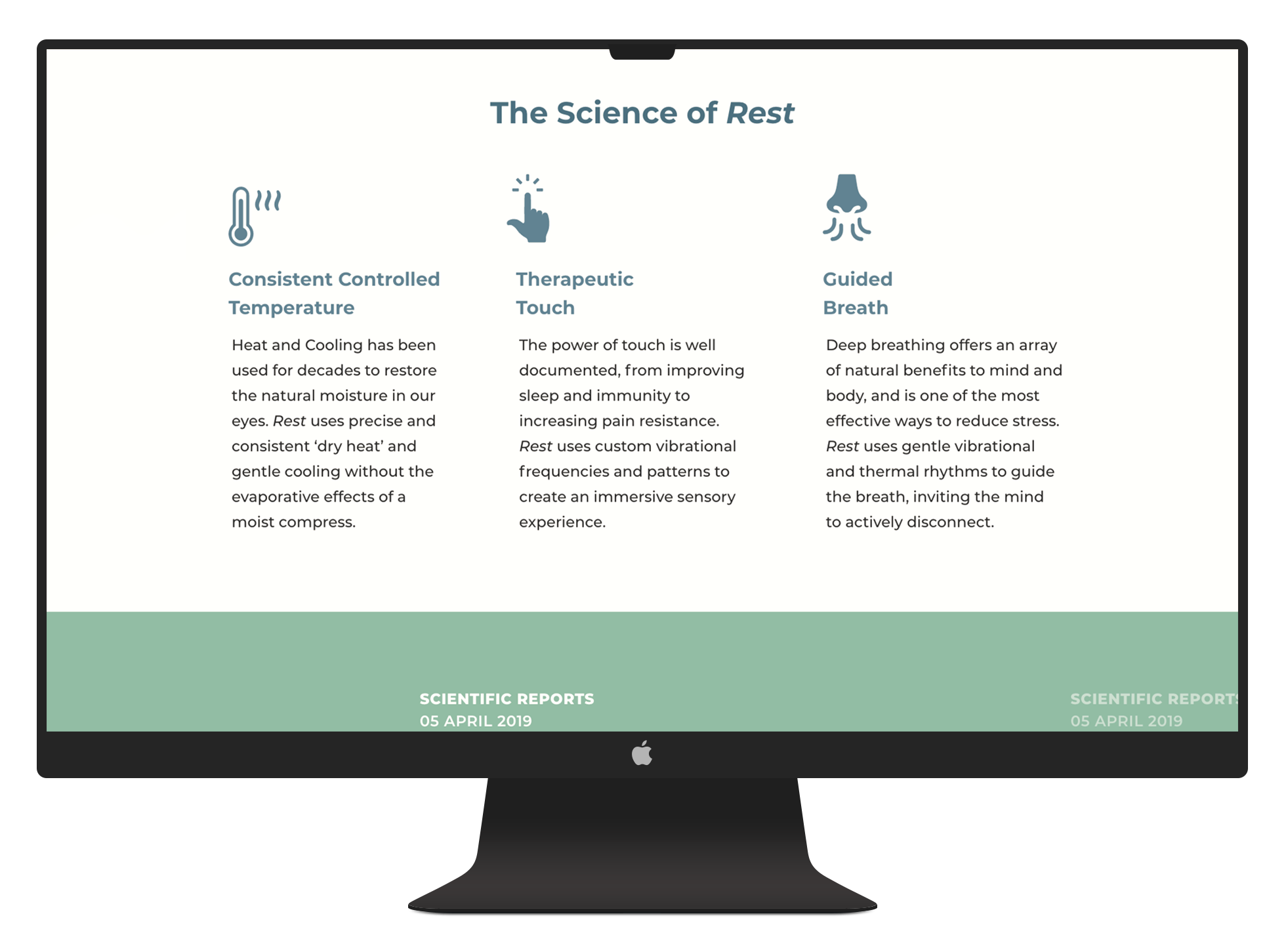
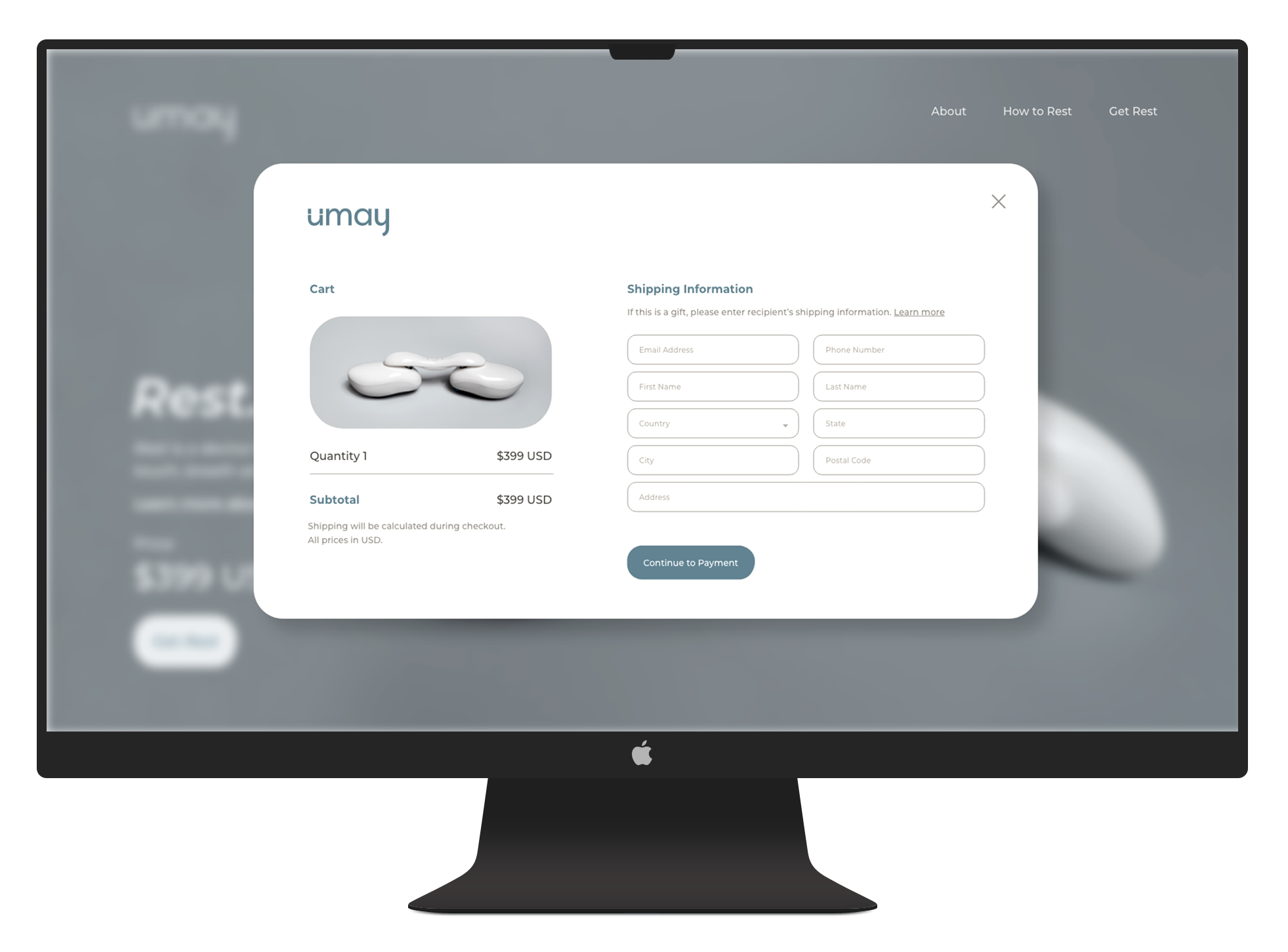
After careful consideration and testing, the team decided to pursue a balanced approach shown in Version 3 (Final Design) that incorporated both product-focused and lifestyle-focused elements. This approach would allow the website to appeal to a wider range of users by providing both technical information and practical applications. By doing so, users would be able to fully understand the product and its benefits while also seeing how it could fit into their daily lives.
Throughout the design process, the team maintained brand consistency to ensure that the website aligned with the established brand guidelines of the company. Overall, the website provides a comprehensive and user-friendly experience that highlights the unique features and benefits of the Umay device. With a balanced approach that incorporates both technical information and practical applications, the website can appeal to a wider audience and provide users with a complete understanding of the product and how it can benefit their daily lives.
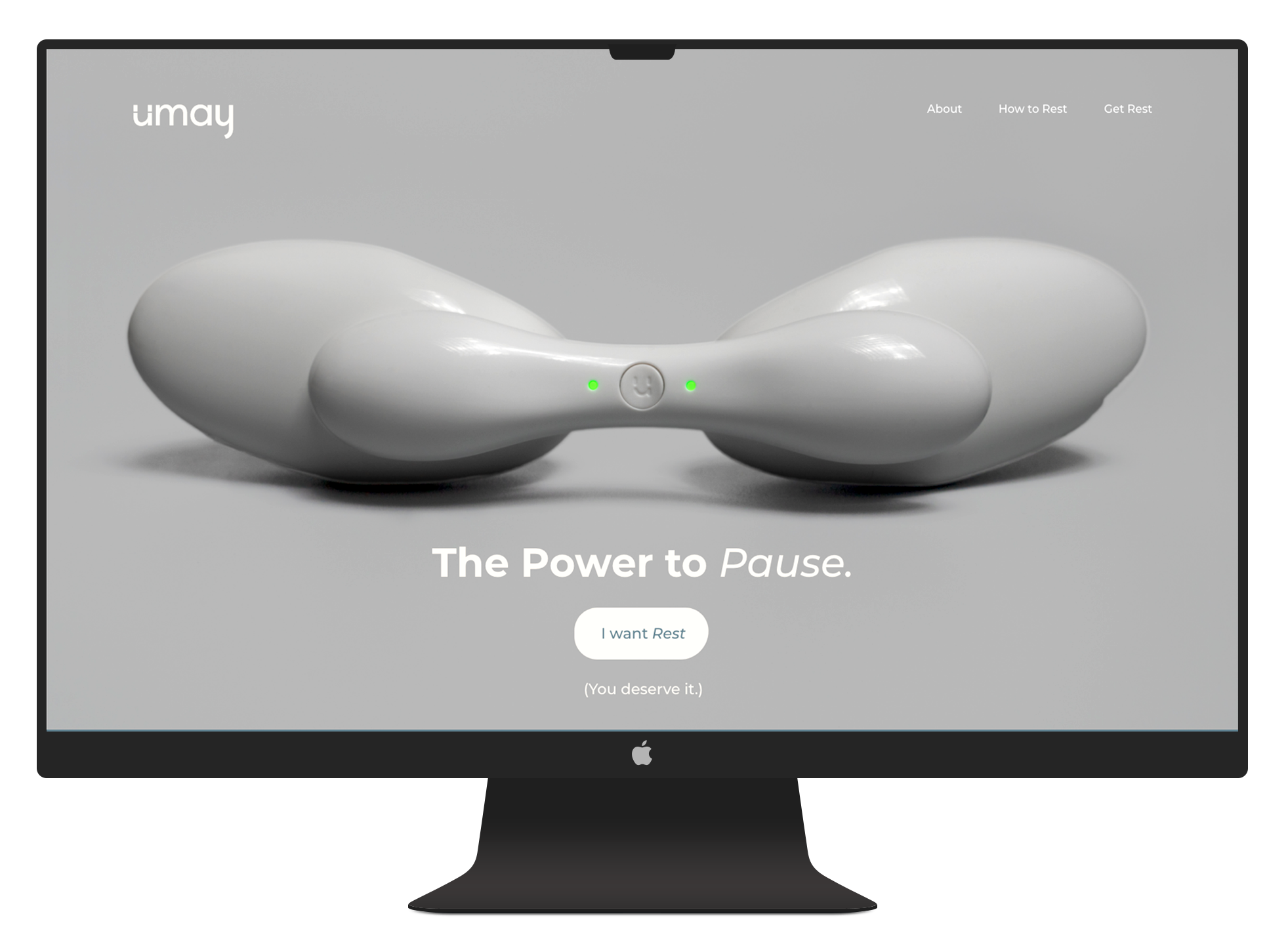
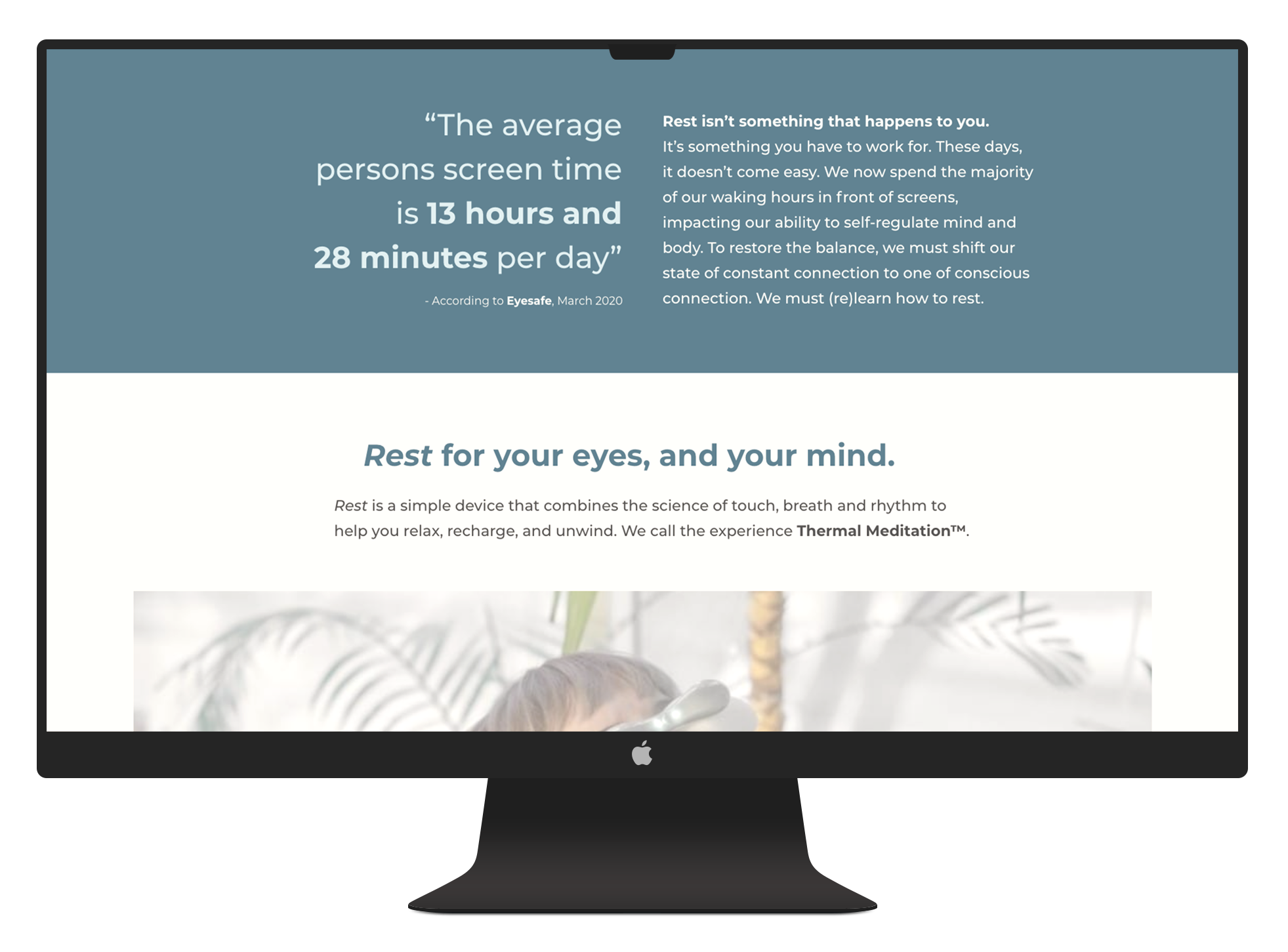
In conclusion, designing a website for Umay was an exciting and rewarding project. Through user research, wireframing, prototyping, and testing, we were able to create a user-centered website that meets the needs of both the business and its customers. The final design not only looks visually appealing but is also easy to navigate, making the shopping experience more enjoyable for the users. The feedback received from user testing was valuable in refining the design and improving the user experience. Overall, we believe that the new website design will help Umay increase its online sales, build brand loyalty, and ultimately achieve its business goals.